
Disclaimer: For Research Use Only. This article is a scientific overview of tesamorelin as a research compound, intended for qualified professionals studying GH-axis signaling and pituitary biology in vitro and in preclinical models. It is not medical or veterinary guidance. Tesamorelin offered as a research compound is not a pharmaceutical product, is not for human or animal consumption, and nothing here should be read as a description of human use, dosing, or therapeutic effect.
Tesamorelin is a synthetic analog of growth hormone-releasing hormone (GHRH), engineered with a trans-3-hexenoic acid modification at the N-terminus that protects the 44-amino-acid sequence from rapid degradation by dipeptidyl peptidase-IV (DPP-IV). The result is a GHRH analog with a significantly extended plasma half-life compared to the native peptide, capable of sustaining pituitary somatotroph stimulation in preclinical in-vivo and in-vitro assay systems.
Among the GHRH research analogs, tesamorelin is distinguished by its full-length sequence engagement with the GHRH receptor, a property relevant to researchers studying the complete receptor-binding pharmacophore rather than minimal-sequence agonism.
Key Research Takeaways
- Full-length GHRH sequence: Tesamorelin retains all 44 amino acids of endogenous GHRH, differing from truncated analogs like Sermorelin (GHRH 1-29). This preserves engagement with the complete receptor-binding surface.
- DPP-IV protection via N-terminal conjugation: The trans-3-hexenoic acid moiety at Tyr1 provides steric protection at the DPP-IV cleavage site, extending plasma half-life in preclinical pharmacokinetic models.
- Full GHRHR agonist: Acts on pituitary somatotroph cells via the Gsα-adenylyl cyclase-cAMP-PKA pathway, producing amplified pulsatile GH secretion in preclinical models, not tonic elevation.
- Mid-range kinetic profile: Longer-acting than Sermorelin, shorter-acting than DAC-conjugated CJC-1295. Suited for sustained but temporally bounded GHRHR stimulation experiments.
- Preclinical evidence base: GH-axis activation data available from in-vitro receptor studies and rodent in-vivo pharmacokinetic models. Research use only. Not for human or animal consumption.
What Is Tesamorelin?
Tesamorelin is a synthetic GHRH analog built on the complete 44-amino-acid sequence of endogenous human GHRH, with one structural modification: a trans-3-hexenoic acid group conjugated at the N-terminus. Native GHRH is degraded rapidly by DPP-IV, which cleaves the Tyr1-Ala2 bond within minutes of administration. The N-terminal conjugate interferes with that recognition site, shielding the peptide from proteolytic inactivation while leaving the C-terminal helical domain, the primary receptor-binding pharmacophore, completely intact.
For GH-axis researchers, the practical consequence is a tool that produces sustained GHRHR stimulation in animal models without requiring continuous infusion, making it useful for studying pituitary axis dynamics under defined, prolonged receptor engagement. It is available from Peptides Source as a lyophilized research compound for in-vitro and preclinical laboratory use.
How Tesamorelin Works
What Happens at the GHRH Receptor?
Tesamorelin binds and fully activates the GHRH receptor (GHRHR), a class B G-protein-coupled receptor expressed on anterior pituitary somatotroph cells.
Receptor engagement triggers the Gsα-adenylyl cyclase pathway, elevating intracellular cAMP, activating protein kinase A (PKA), and driving both GH gene transcription and calcium-dependent exocytotic release of stored GH. In preclinical in-vivo models, this produces augmented GH secretory pulses, an amplified pulsatile output rather than sustained tonic GH elevation.
Does GH Pulsatility Persist Under Sustained GHRHR Stimulation?
Yes, and this is mechanistically significant. Studies with long-acting GHRH analogs, including CJC-1295 with DAC, have demonstrated in preclinical systems that pulsatile GH secretion persists even during sustained receptor occupancy (Ionescu & Frohman, 2006).
Somatostatin-mediated inhibitory input at the pituitary level continues to modulate GH release independently of GHRHR stimulation. For researchers designing stimulation experiments, this means that receptor occupancy and secretory output pattern are not equivalent, the GH pulse shape reflects the interplay between stimulatory (tesamorelin/GHRHR) and inhibitory (somatostatin) signaling at the somatotroph.
The Downstream Axis: GH to IGF-1
Downstream of GH secretion, hepatic and peripheral IGF-1 production proceeds through the JAK2/STAT5 signaling cascade, the canonical GH-axis pathway characterized extensively in rodent preclinical systems. IGF-1 output is the primary quantitative readout of axis activation used in metabolic and endocrine model studies, and it represents the endpoint that most tesamorelin-based preclinical experiments are designed to measure or manipulate.
What the Preclinical Evidence Shows
The preclinical literature on tesamorelin spans in-vitro GHRHR pharmacology, rodent pharmacokinetic studies, and a clinical literature examining GH-axis responses in a defined patient population (Falutz et al., 2007). For RUO laboratory applications, the operative evidence is the in-vitro receptor data and animal-model pharmacokinetics. The clinical studies are cited here as mechanistic evidence that GHRHR stimulation modulates axis-level GH output, not as a basis for extrapolating outcomes to preclinical model systems.
In-vitro receptor pharmacology confirms tesamorelin’s binding affinity and full agonist activity at GHRHR, with the receptor-binding pharmacophore intact despite N-terminal modification.
Pharmacokinetic data in animal models documents the extended plasma half-life conferred by the trans-3-hexenoic acid conjugation, demonstrating that the N-terminal modification achieves its intended purpose without altering receptor selectivity.
Pulsatility research (Ionescu & Frohman, 2006), conducted with CJC-1295/DAC but directly relevant to tesamorelin’s axis behavior, shows that even with sustained GHRHR occupancy, endogenous somatostatinergic feedback preserves pulsatile GH release patterns. This finding has practical implications for designing GH-axis stimulation experiments with any long-acting GHRH analog.
Researchers should read all of these studies in the context of the specific species, model system, and experimental conditions used. Species differences in DPP-IV expression, IGF-1 receptor sensitivity, and STAT5 signaling mean that findings in one preclinical model are findings in that model.
What Tesamorelin Is Used to Study
In preclinical GH-axis research, tesamorelin is used as a pharmacological tool to interrogate the following:
- GHRHR agonism and GH secretion dynamics. Studies examining how sustained GHRHR engagement affects pituitary GH pulse amplitude, frequency, and duration in animal models.
- GH/IGF-1 axis modulation. Experiments using IGF-1 as the primary readout to characterize axis activation under defined GHRHR stimulation conditions.
- DPP-IV-resistant GHRH analog pharmacology. Research comparing the pharmacokinetic profiles of different N-terminal modification strategies across the GHRH analog class.
- Comparative GHRH analog studies. Side-by-side experiments with Sermorelin (minimal-sequence, short-acting) and CJC-1295/DAC (albumin-binding, long-acting) to map the kinetic spectrum of GHRHR stimulation.
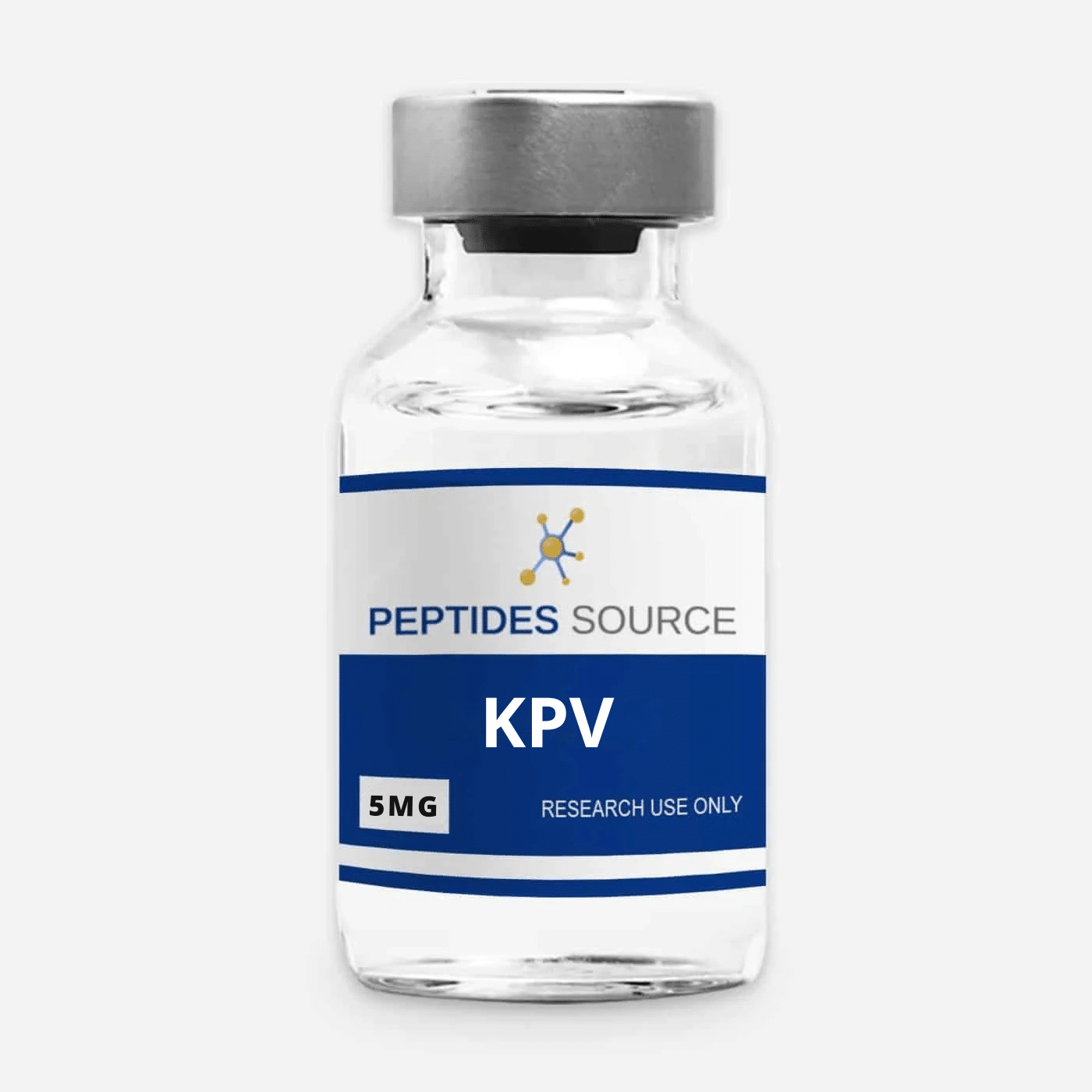
Researchers building a broader GH-axis or multi-pathway research program may also find the KPV peptide profile (NF-κB/anti-inflammatory axis) and the Dihexa profile (HGF/c-Met synaptogenic signaling) useful as adjacent compound references across research categories.
Tesamorelin vs. Other GHRH Analogs in Research
Tesamorelin vs. Sermorelin
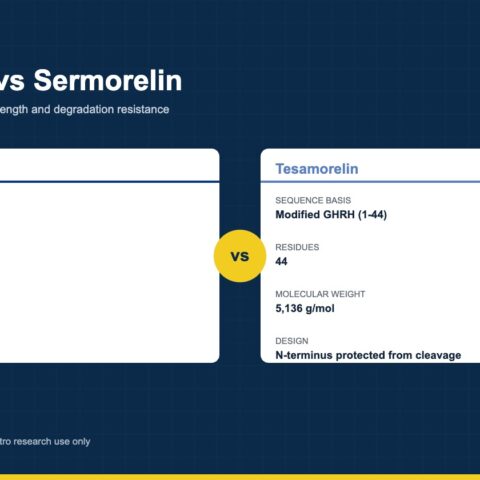
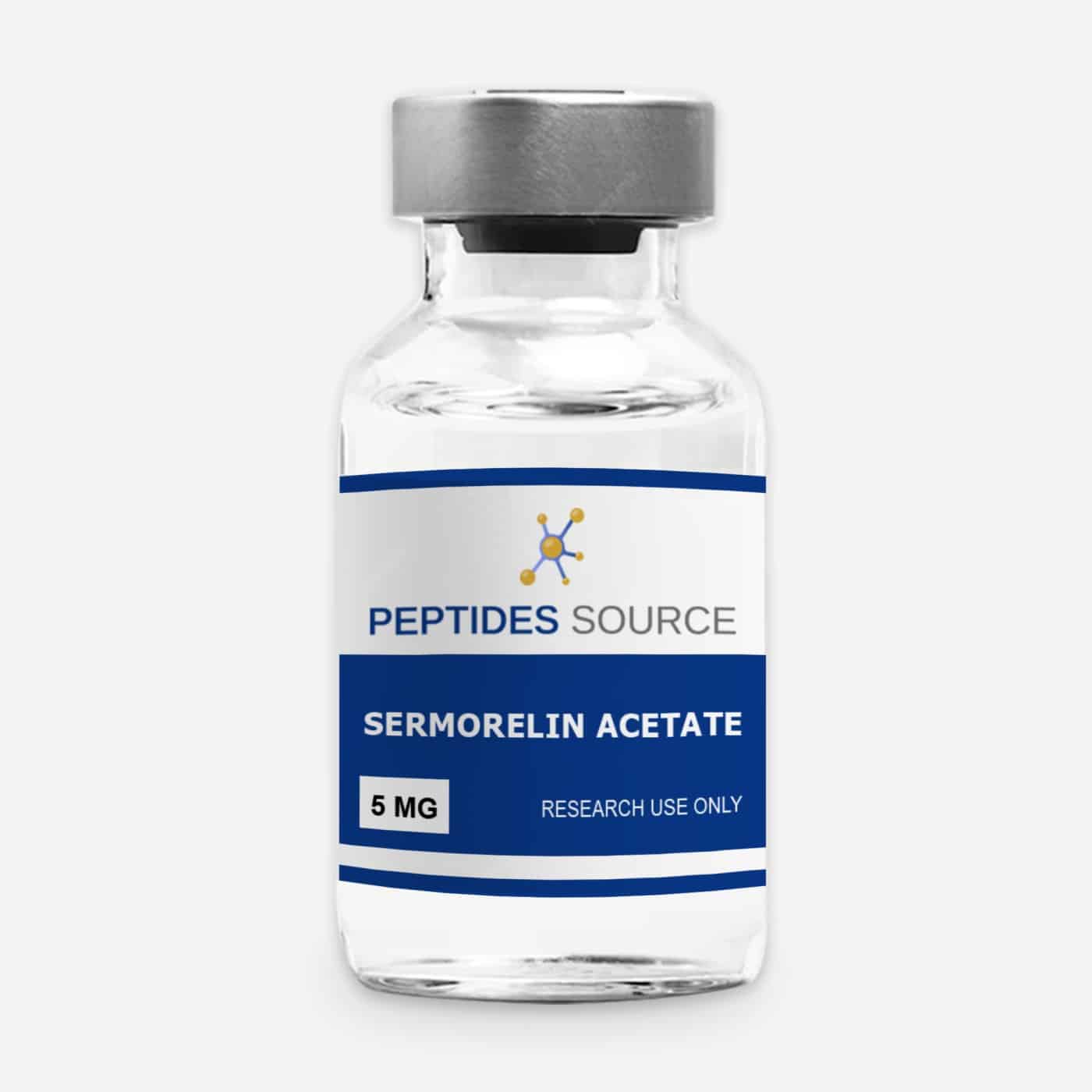
Our Sermorelin research profile covers GHRH(1-29) in detail, the truncated N-terminal fragment containing the minimal sequence sufficient for GHRHR activation. Its shorter length gives it a shorter plasma half-life than tesamorelin, which can be an advantage in experiments requiring a brief, well-defined stimulation pulse. Tesamorelin’s full 44-amino-acid sequence provides engagement with the complete receptor-binding surface and an extended stimulation window. Researchers comparing the two are effectively comparing minimal-sequence versus full-sequence GHRHR pharmacology in the same preclinical system. For the full side-by-side, including molecular profiles, sequence basis and how to choose between them for a given study design, see our dedicated Tesamorelin vs Sermorelin comparison.
Tesamorelin vs. CJC-1295 with DAC
CJC-1295 with DAC uses a Drug Affinity Complex (DAC) to achieve covalent albumin binding, extending plasma half-life to the order of days in animal models. This allows studies of continuous, long-duration GHRHR occupancy that would not be practical with tesamorelin’s hour-range half-life.
The pulsatility research discussed above (Ionescu & Frohman, 2006) used CJC-1295/DAC to establish the mechanistic finding that GH pulsatility persists even with sustained GHRHR occupancy, a finding directly relevant to tesamorelin experiments as well. For a detailed look at DAC conjugation pharmacology, see the CJC-1295 research profile.
Selecting the Right Analog for the Experimental Design
| Analog | Sequence | Stability mechanism | Approx. t½ (preclinical) | Best suited for |
|---|---|---|---|---|
| Sermorelin | GHRH(1-29) | Truncated fragment | Minutes to low hours | Short-pulse, acute GH-release studies |
| Tesamorelin | GHRH(1-44) | trans-3-hexenoic acid at N-terminus | Hours | Sustained stimulation; full-sequence receptor pharmacology |
| CJC-1295 with DAC | GHRH(1-29) + DAC | Covalent albumin binding | Days | Chronic GHRHR occupancy; long-duration axis studies |
Browse the full spectrum of GH-axis and secretagogue research compounds in our Musculoskeletal & Growth Factor Research category.
Handling and Quality Notes
Tesamorelin is supplied as a lyophilized powder. At approximately 5,135 Da, it is among the larger peptides handled in standard laboratory settings, reconstitution technique matters accordingly. Add diluent slowly down the inner wall of the vial and mix by gentle swirling; aggressive agitation can cause aggregation in peptides of this molecular weight.
Our laboratory guide to reconstituting research peptides covers diluent selection, concentration arithmetic, and storage protocols for high-molecular-weight peptides. Lyophilized material should be stored at −20 °C in a sealed, desiccated container; once reconstituted, aliquot immediately and avoid repeated freeze-thaw cycles.
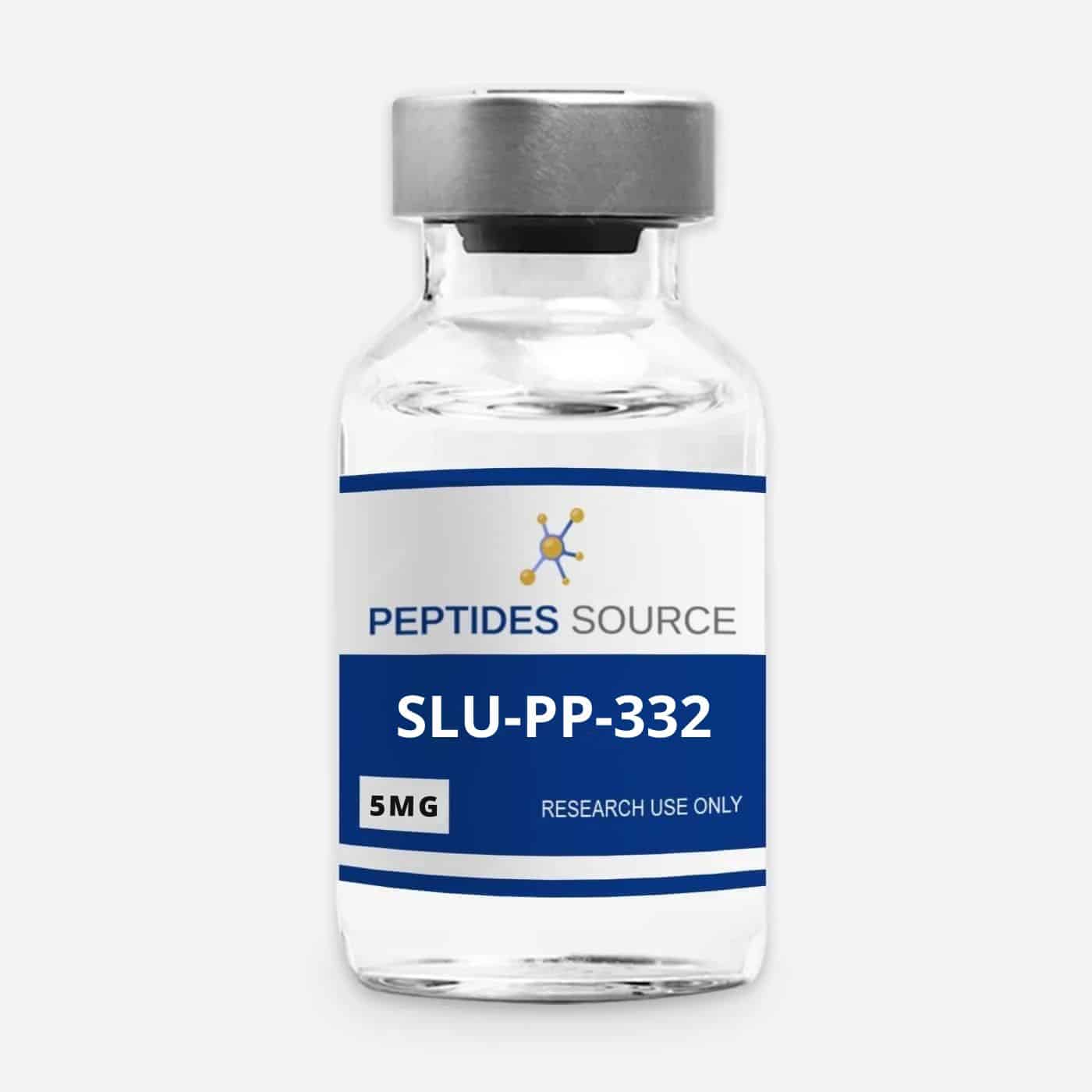
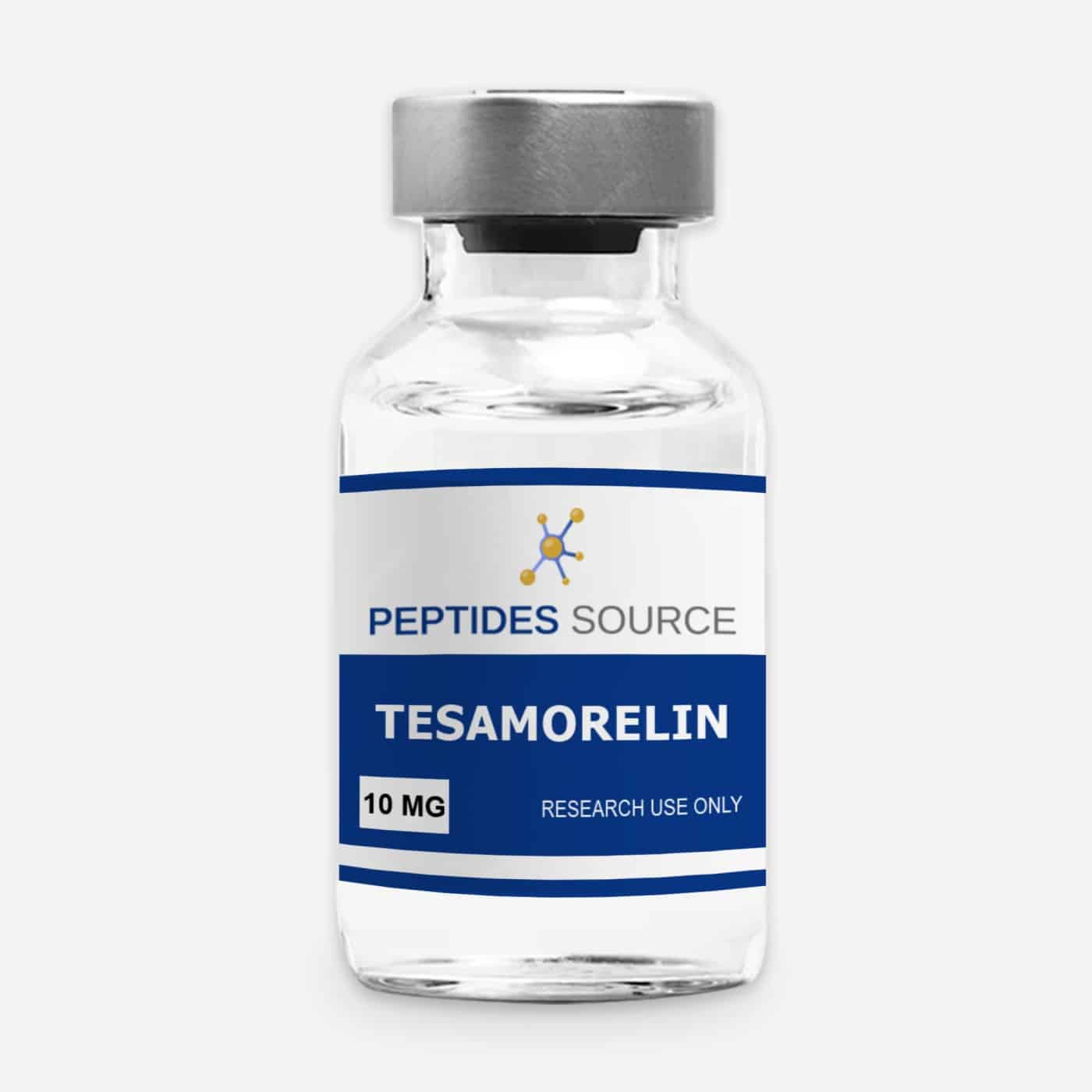
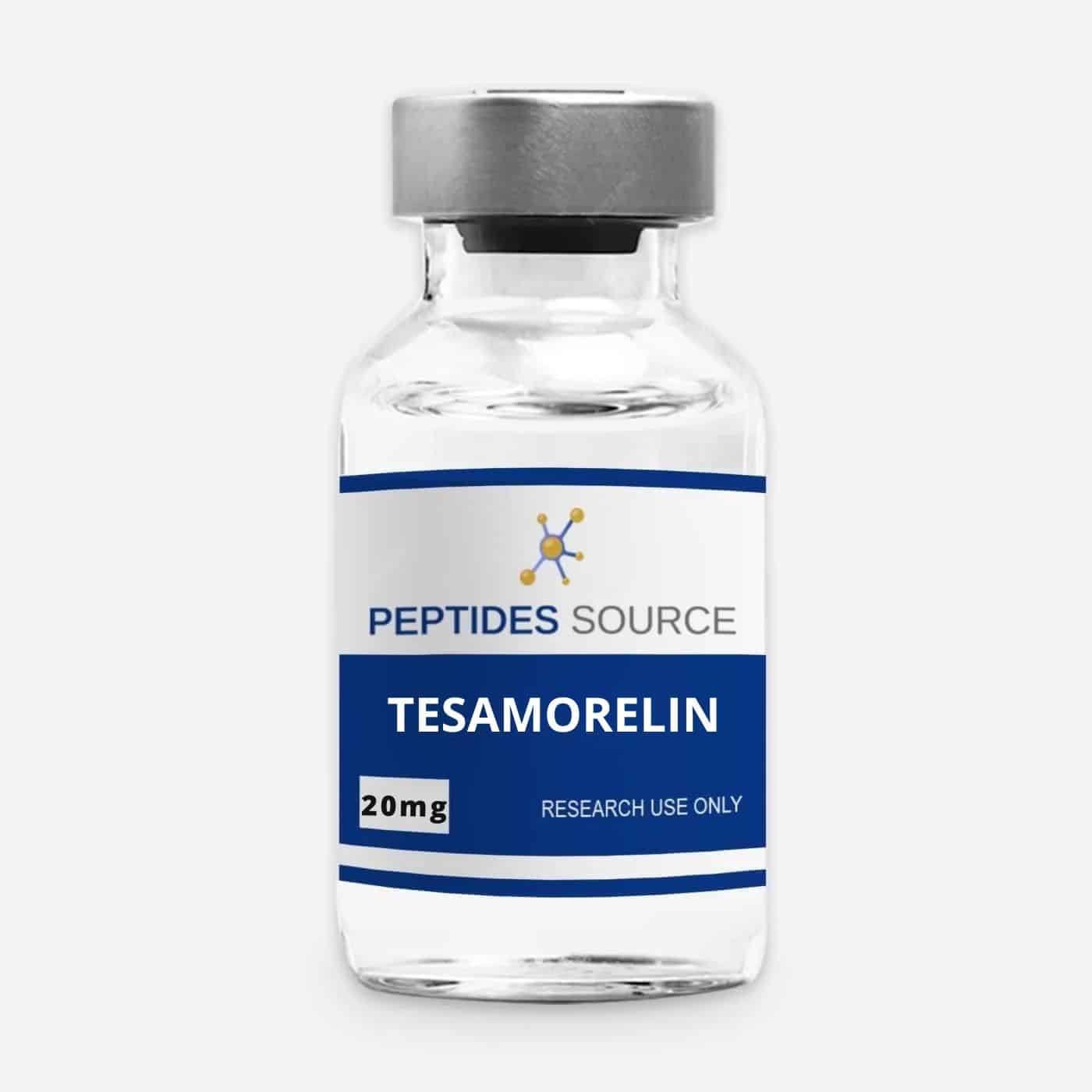
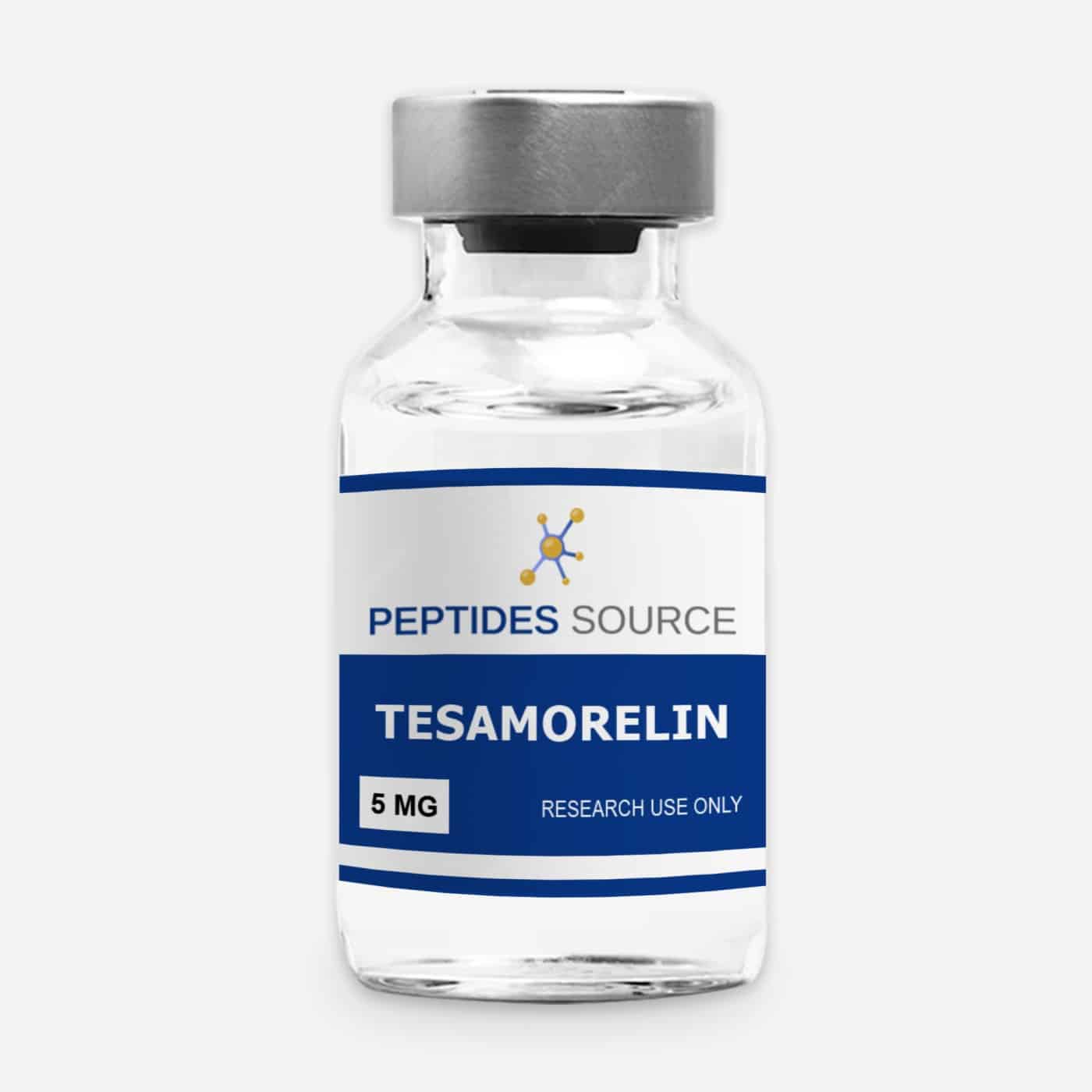
Source tesamorelin with ≥98% purity by reversed-phase HPLC, with mass-spectrometric confirmation of molecular mass (~5,135 Da) and N-terminal modification, documented on a lot-specific third-party certificate of analysis. Consistent analytical documentation is what makes axis-stimulation experiments reproducible. Tesamorelin 5mg is available from Peptides Source for qualified laboratory researchers; additional sizes are listed in the research catalog.
Frequently Asked Questions
What is tesamorelin?
Tesamorelin is a synthetic GHRH analog consisting of the full 44-amino-acid sequence of endogenous human GHRH with a trans-3-hexenoic acid group conjugated at the N-terminus. The conjugation protects the peptide from DPP-IV cleavage, significantly extending its plasma half-life in preclinical pharmacokinetic studies. It is studied as an in-vitro and preclinical tool for GH-axis biology and is supplied strictly for research use only, not for human or animal consumption.
How does tesamorelin differ from native GHRH?
The amino-acid sequence is identical to endogenous GHRH(1-44). The only structural difference is the trans-3-hexenoic acid conjugation at the N-terminus, which provides steric protection at the Tyr1-Ala2 DPP-IV cleavage site. Native GHRH is inactivated within minutes in plasma; tesamorelin’s half-life in preclinical models is significantly extended, enabling sustained GHRHR stimulation studies that are not practical with the native peptide.
Does pulsatile GH secretion persist when the GHRH receptor is continuously occupied?
Yes, based on preclinical evidence from long-acting GHRH analogs. Studies with CJC-1295/DAC demonstrated that GH pulsatility persists even under sustained GHRHR occupancy, due to ongoing somatostatinergic inhibitory tone at the pituitary. This means that sustained GHRHR stimulation in preclinical models amplifies GH pulses rather than producing a flat tonic GH elevation, a mechanistically important distinction for experiment design.
How does tesamorelin compare to Sermorelin as a preclinical research tool?
Sermorelin is GHRH(1-29), the minimal receptor-activating fragment, with a shorter plasma half-life than tesamorelin. Tesamorelin carries the full 44-amino-acid sequence and its N-terminal conjugate, providing a longer stimulation window and engagement with the complete receptor-binding surface. The choice between them depends on whether the experimental design calls for brief pulse stimulation (Sermorelin) or sustained GHRHR engagement with full-sequence receptor pharmacology (tesamorelin). Our Tesamorelin vs Sermorelin comparison covers this in full.
What purity documentation should researchers require for tesamorelin?
Identity and purity should be confirmed by reversed-phase HPLC (target ≥98%) with mass-spectrometric verification of molecular mass (~5,135 Da) and confirmation of the N-terminal trans-3-hexenoic acid modification, documented on a lot-specific third-party certificate of analysis. Consistent analytical documentation across lots is what distinguishes compound variability from biological variability in axis-stimulation experiments.
Disclaimer: For Research Use Only. The information above is provided solely for in-vitro and preclinical research context. Tesamorelin offered as a research compound is not a pharmaceutical product, is not intended for human or animal consumption, and none of the molecular, mechanistic, or preclinical information here describes or implies human use, dosing, or therapeutic effect.
References
- PubChem, Compound Summary: Tesamorelin (CID 16134816), National Center for Biotechnology Information.
- Falutz J, et al. Metabolic effects of a growth hormone-releasing factor in patients with HIV. N Engl J Med. 2007;357(23):2359-2370. PMID 18057338. (Clinical study, cited as mechanistic evidence of GH-axis response to GHRHR stimulation; not a basis for preclinical model extrapolation.)
- Ionescu M, Frohman LA. Pulsatile secretion of growth hormone (GH) persists during continuous stimulation by CJC-1295, a long-acting GH-releasing hormone analog. J Clin Endocrinol Metab. 2006;91(12):4792-4797. PMID 16954155.
- Prakash A, Goa KL. Sermorelin: a review of its use in the diagnosis and treatment of children with idiopathic growth hormone deficiency. BioDrugs. 1999;12(2):139-157. PMID 18031173. (GH-axis system context, GHRH analog pharmacology and receptor biology.)
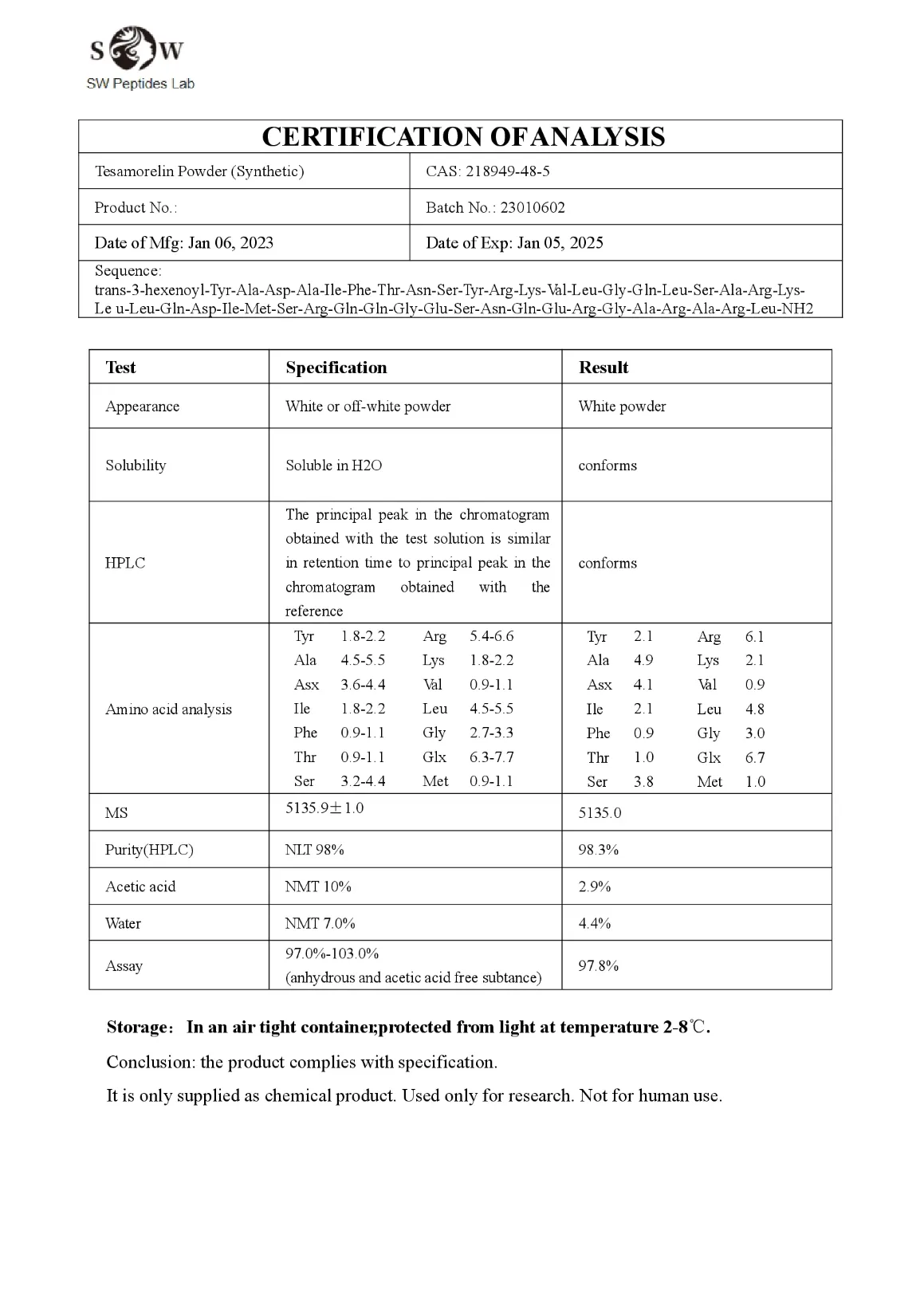
Certificate of Analysis (COA): Tesamorelin
Each batch of this research compound is verified by an independent laboratory (SW Peptides Lab). The certificate of analysis below documents the identity and purity results. Key verified values:
- Purity (HPLC): 98.3% (specification: not less than 98%)
- Identity: HPLC and mass spectrometry conform to reference; MS 5135.0
- CAS number: 218949-48-5
- Appearance / solubility: white powder; soluble in water
- Water: 4.4% | Acetic acid: 2.9% | Assay: 97.8%
- Batch: 23010602
- Storage: air-tight container, protected from light, 2-8°C
For laboratory research use only. Not for human consumption.