Disclaimer — For Research Use Only. The following is provided for educational and laboratory-research purposes only. All products referenced are sold strictly for Research Use Only (RUO). Nothing here is medical advice, and none of these materials are for human or veterinary use. References to published studies describe the scientific literature and are not claims about any product.
CJC-1295 is one of the most frequently studied synthetic growth-hormone-releasing-hormone (GHRH) analogs in the research-peptide literature, and it is commonly encountered in two distinct forms — with DAC and without DAC. The difference is not in the core peptide but in a half-life-extending modification, producing two molecules with very different pharmacokinetic profiles. This profile explains the underlying GHRH structure, what the DAC technology does, and how the two forms are characterized in the literature, within a Research-Use-Only framework.
What is CJC-1295?
CJC-1295 is a synthetic analog of the first 29 amino acids of human growth-hormone-releasing hormone — the GHRH(1–29) fragment, the shortest sequence that retains the full GHRH-receptor activity of the native 44-amino-acid hormone. Native GHRH(1–29) is rapidly degraded in plasma, largely by dipeptidyl peptidase-IV (DPP-IV) and other proteases, giving it a half-life on the order of minutes.
CJC-1295 was engineered to resist that degradation. It incorporates four amino-acid substitutions into the GHRH(1–29) backbone that protect the peptide from enzymatic cleavage and reduce conformational breakdown. This modified GHRH(1–29) backbone is the molecule sold in research settings as CJC-1295 without DAC (also called “modified GRF(1–29)”).
The DAC technology
DAC stands for Drug Affinity Complex, the half-life-extending technology developed by ConjuChem that gives the “with DAC” form its name. The DAC version adds a maleimidopropionyl-lysine moiety to the peptide. After it enters circulation, this group forms a covalent bond with serum albumin — the most abundant protein in plasma — tethering the peptide to a long-lived carrier.
Because albumin circulates for weeks and shields the bound peptide from rapid clearance, this single modification transforms the pharmacokinetics. In the foundational clinical pharmacology study (Teichman et al., 2006), CJC-1295 with DAC demonstrated a measured plasma half-life of approximately 5.8–8.1 days — a dramatic extension from the minutes-long half-life of the unmodified GHRH fragment.
With DAC vs. without DAC: the key distinction
The two forms share the same GHRH-analog core and the same receptor target. What separates them is duration of action:
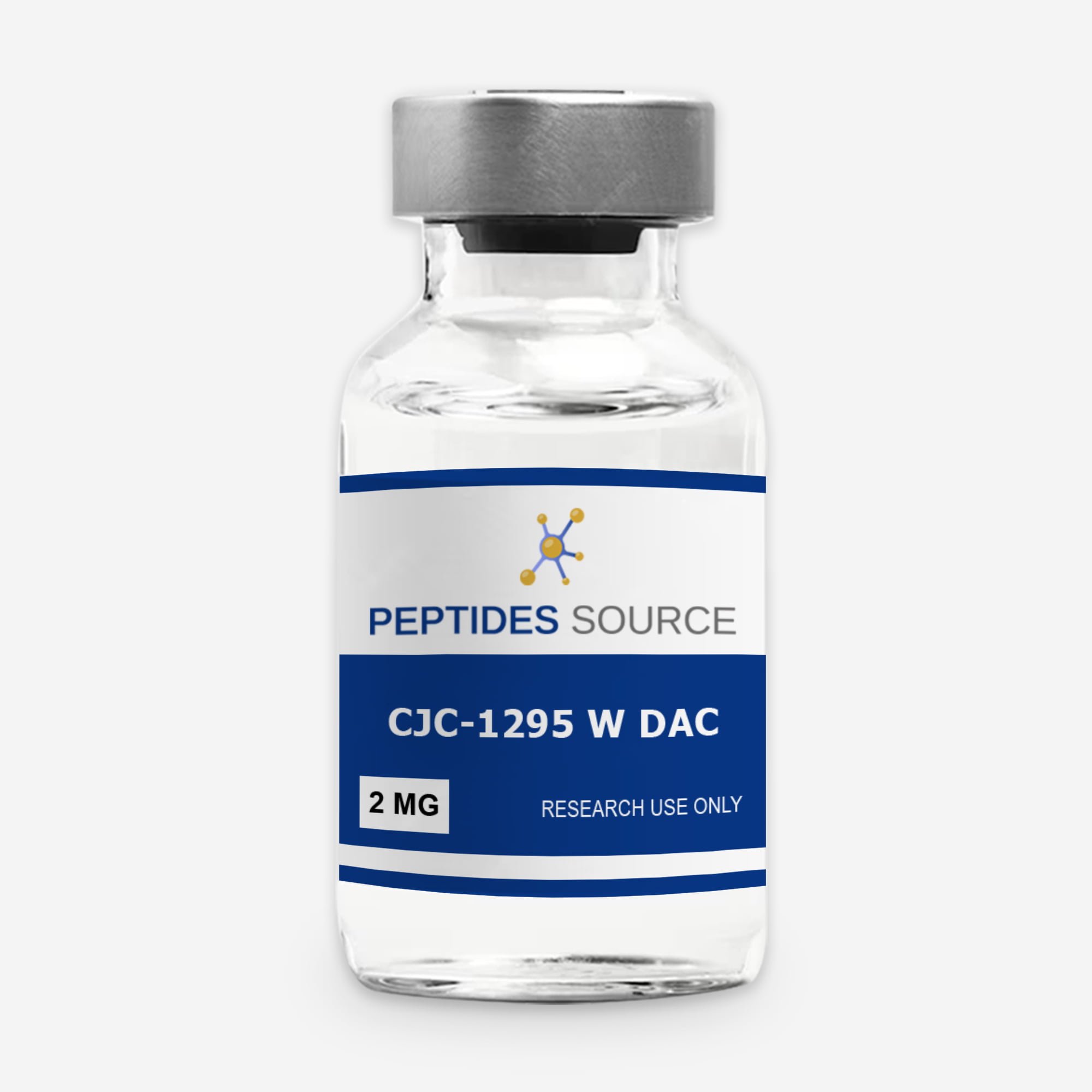
- CJC-1295 with DAC carries the albumin-binding Drug Affinity Complex and exhibits a multi-day half-life (~6–8 days in published data), producing a sustained, prolonged elevation of growth-hormone-axis activity in research models. Available as CJC-1295 with DAC 2mg and 5mg.
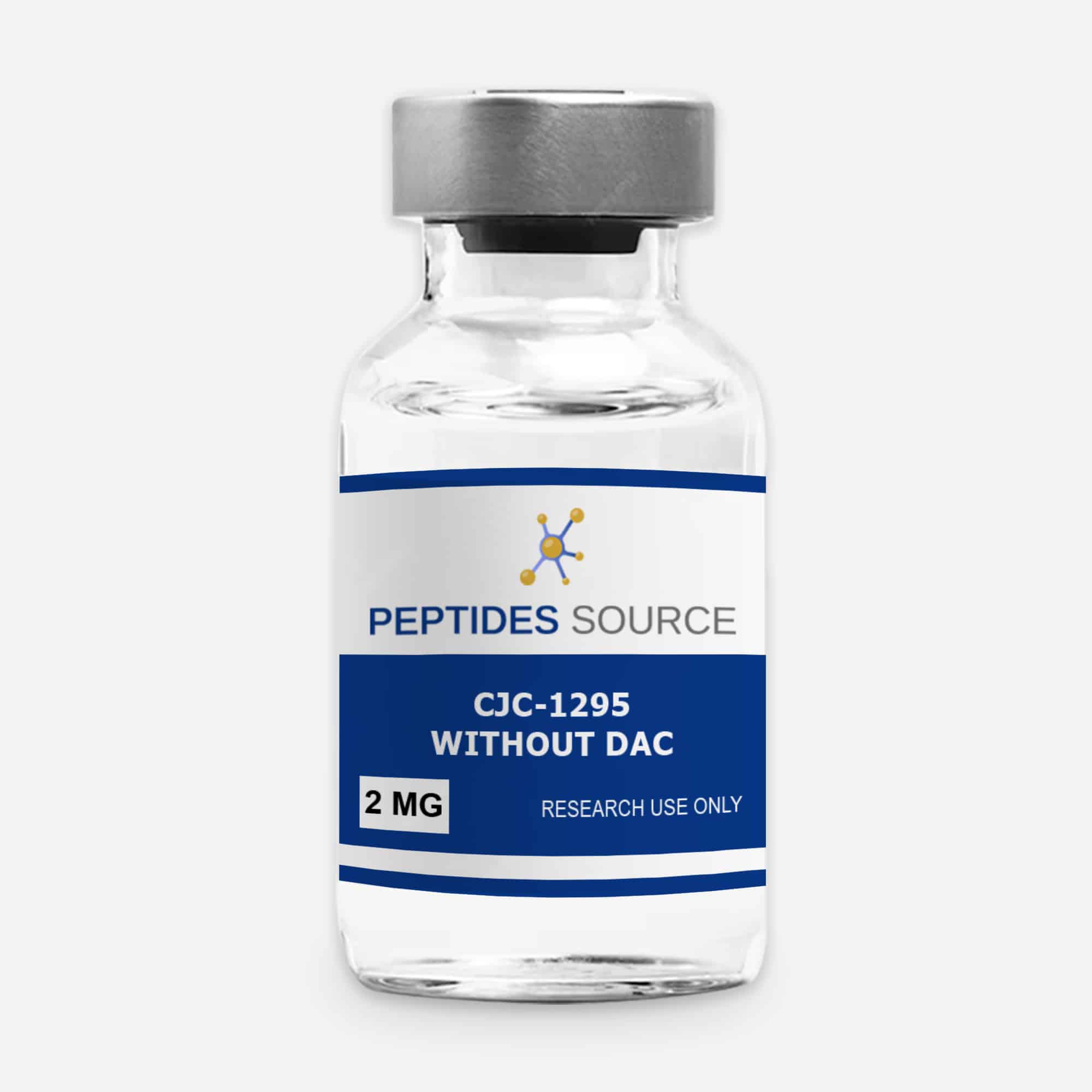
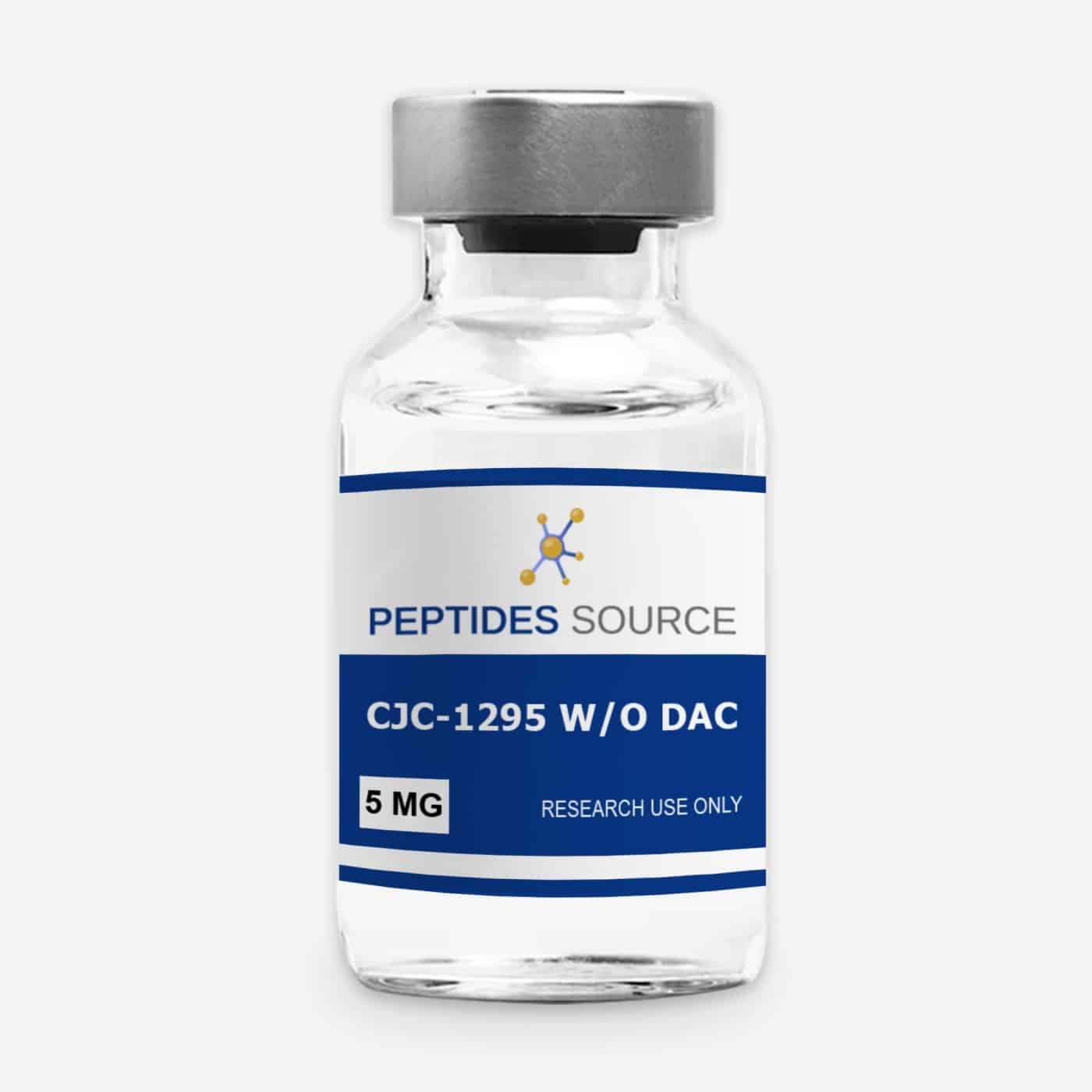
- CJC-1295 without DAC (modified GRF 1–29) lacks the albumin-binding group. It retains the enzyme-resistant substitutions but clears far faster, on the order of ~30 minutes, producing a shorter, more pulse-like profile closer to native GHRH kinetics. Available as CJC-1295 without DAC 2mg and 5mg.
This pharmacokinetic contrast — sustained versus short-acting — is the central reason researchers distinguish between the two forms when designing studies that examine continuous versus pulsatile GHRH-receptor stimulation.
Mechanism of action
CJC-1295, in both forms, acts as an agonist at the GHRH receptor on the somatotroph cells of the anterior pituitary. Receptor binding stimulates the synthesis and release of growth hormone through the same signaling pathway used by the endogenous hormone. The structural value of the analog is its stability: by resisting DPP-IV cleavage (and, in the DAC form, by binding albumin), it sustains receptor engagement far longer than native GHRH can.
A point of mechanistic interest is the difference between pulsatile and sustained GHRH signaling. The short-acting no-DAC form preserves a more episodic stimulation pattern, while the DAC form maintains a continuous elevated tone — a contrast used in research to probe how the timing of GHRH-receptor activation influences downstream growth-hormone-axis dynamics.
CJC-1295 in the context of GH-secretagogue research
CJC-1295 is a GHRH analog — it acts on the GHRH receptor. Within the Musculoskeletal & Growth Research category, this places it in a different mechanistic class from the growth-hormone secretagogues (GHRPs) such as Ipamorelin, which act on the separate ghrelin/GHS receptor. Because the two classes engage distinct receptors, the literature frequently examines them together to study complementary effects on the growth-hormone axis — the basis for combined research preparations such as the CJC-1295 no-DAC / Ipamorelin blend.
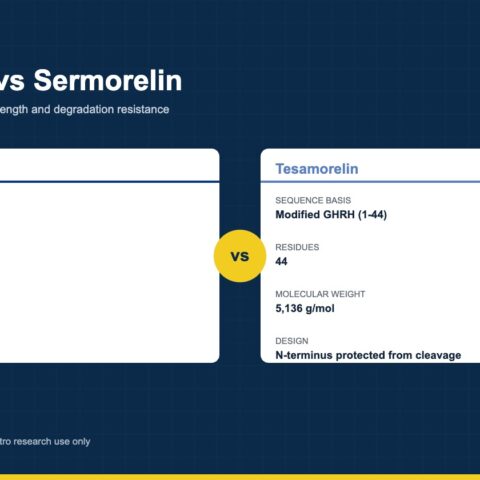
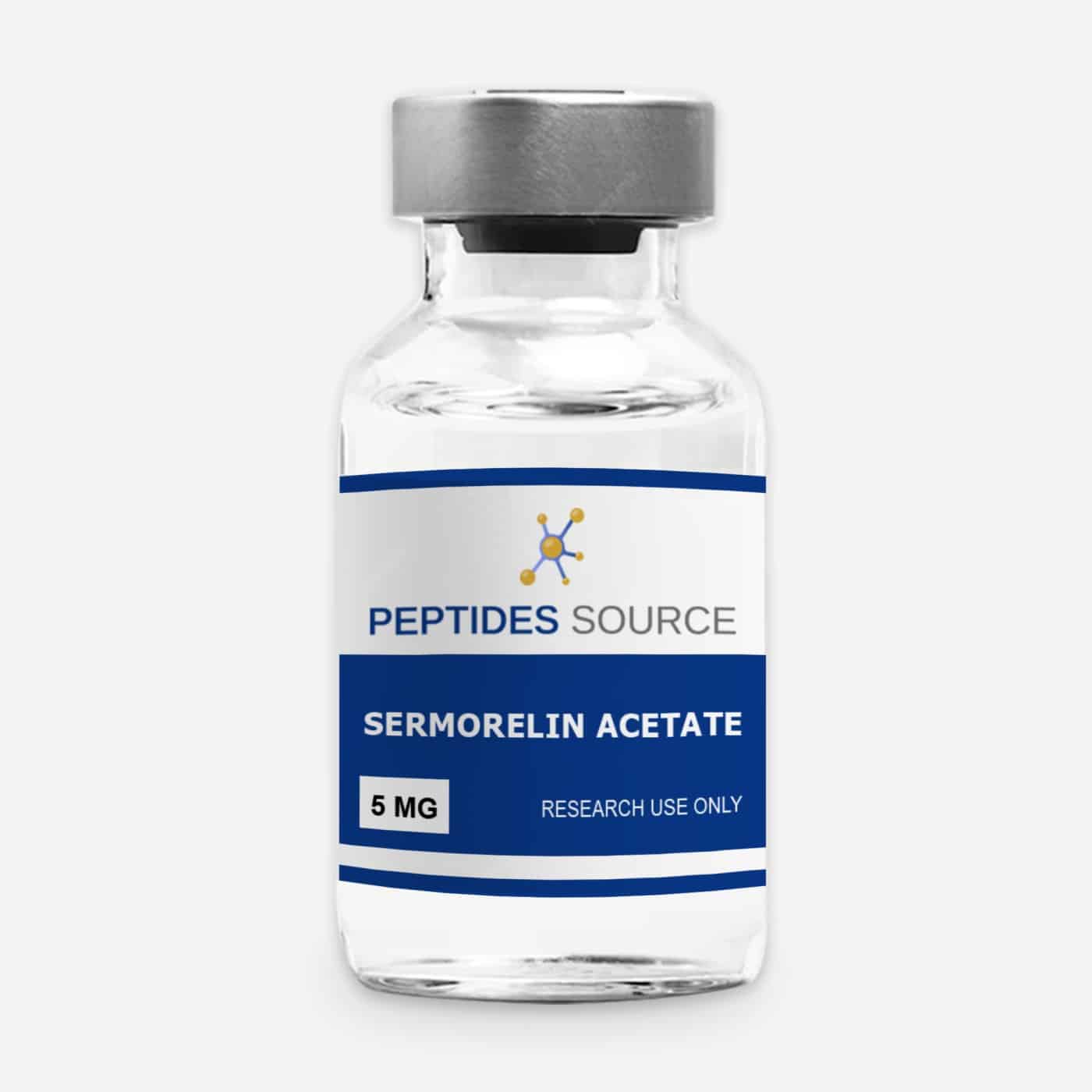
For the closely related GHRH analog that shares this receptor target but differs in structure and half-life, see our companion Sermorelin: A GHRH-Analog Research Profile. Sermorelin is itself a GHRH(1–29) analog without the enzyme-resistant substitutions or DAC modification, making it a useful point of comparison.
Research handling and quality
CJC-1295 is supplied as a lyophilized powder and is reconstituted prior to use following standard peptide-handling practice — see How to Reconstitute Research Peptides for diluent selection, aseptic technique, and storage. Lyophilized material is the most stable form for storage; reconstituted solution should be handled within its documented working window.
Every CJC-1295 research peptide from Peptides Source is verified to ≥98% purity by HPLC and accompanied by a third-party certificate of analysis (COA), manufactured under cGMP/ISO conditions in the USA.
Frequently asked questions
What is the difference between CJC-1295 with DAC and without DAC?
Both share the same GHRH-analog core. The “with DAC” form adds a Drug Affinity Complex that binds serum albumin, extending half-life to roughly 6–8 days. The “without DAC” form (modified GRF 1–29) lacks that group and clears in about 30 minutes, giving a short, pulse-like profile.
What does DAC stand for?
Drug Affinity Complex — a half-life-extending technology that covalently links the peptide to serum albumin after it enters circulation.
What is CJC-1295’s mechanism of action?
It is a GHRH-receptor agonist, binding the GHRH receptor on pituitary somatotrophs and, in research models, stimulating growth-hormone synthesis and release through the native GHRH pathway.
How is CJC-1295 different from Ipamorelin?
CJC-1295 is a GHRH analog acting on the GHRH receptor; Ipamorelin is a growth-hormone secretagogue acting on the separate ghrelin/GHS receptor.
How is CJC-1295 different from Sermorelin?
Both are GHRH(1–29) analogs targeting the same receptor, but Sermorelin lacks the enzyme-resistant substitutions and DAC modification, giving it a shorter half-life than either CJC-1295 form.
Research Use Only. Intended exclusively for in-vitro laboratory research by qualified professionals. Not drugs, foods, cosmetics, or medical devices, and not for human or animal use. References to published research describe the scientific literature and do not constitute claims about any product. Statements have not been evaluated by the FDA.
References
- Teichman SL, Neale A, Lawrence B, Gagnon C, Castaigne J-P, Frohman LA. Prolonged stimulation of growth hormone (GH) and insulin-like growth factor I secretion by CJC-1295, a long-acting analog of GH-releasing hormone, in healthy adults. J Clin Endocrinol Metab. 2006;91(3):799–805.
- Ionescu M, Frohman LA. Pulsatile secretion of growth hormone (GH) persists during continuous stimulation by CJC-1295, a long-acting GH-releasing hormone analog. J Clin Endocrinol Metab. 2006;91(12):4792–4797.
- Alba M, Fintini D, Sagazio A, et al. Once-daily administration of CJC-1295, a long-acting GHRH analog, normalizes growth in the GHRH knockout mouse. Am J Physiol Endocrinol Metab. 2006;291(6):E1290–E1294.