Key takeaways
- HGH 191AA is recombinant human growth hormone (somatropin) produced as the complete 191-amino-acid sequence, structurally identical to the pituitary-derived hormone.
- The “191AA” label distinguishes the intact protein from shorter analogs such as HGH Fragment 176-191, and from the growth hormone secretagogue peptides that act on the same axis.
- In laboratory research it functions as a well-characterized reference protein, which is why purity verification (HPLC and a certificate of analysis) matters lot to lot.
- It is supplied as a lyophilized powder and reconstituted in the lab before study.
- For research use only. Not for human or veterinary use or consumption.
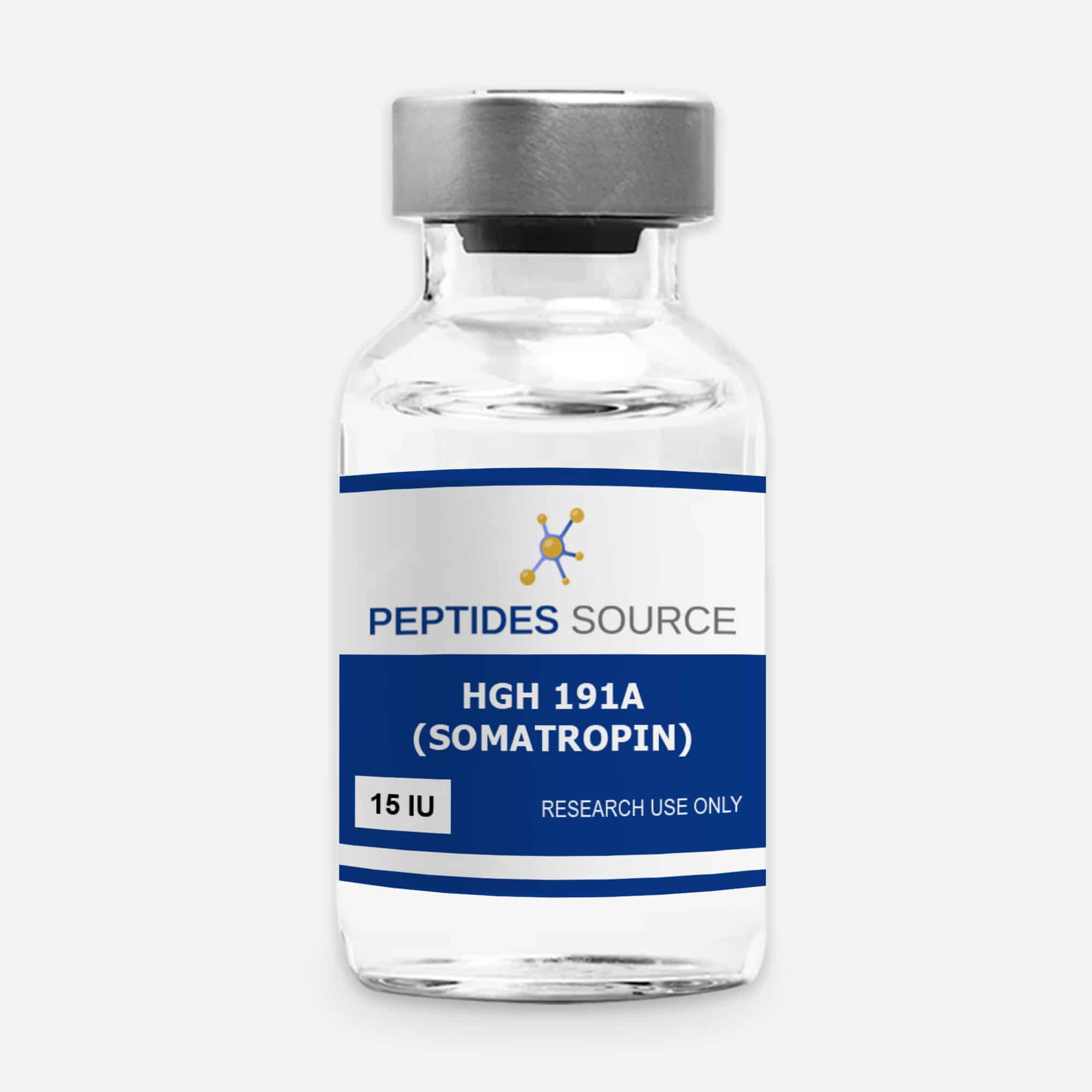
HGH 191AA is recombinant human growth hormone supplied as the complete 191-amino-acid sequence, and it is one of the most studied proteins in endocrinology. The “191AA” label is simply a precise way of describing exactly which molecule is in the vial. This overview explains what HGH 191AA is, how it differs from the fragments and secretagogues it is often confused with, and how researchers handle and study it.
The 191-amino-acid sequence, explained
Human growth hormone is a single-chain polypeptide of 191 amino acids with a molecular weight of roughly 22,124 daltons. Its tertiary structure is built around four helices and stabilized by two intrachain disulfide bridges. [1] Recombinant somatropin reproduces this exact sequence: it is expressed in E. coli, which initially yields a 192-amino-acid precursor, after which the N-terminal methionine is removed to leave a 191-amino-acid protein that is chemically and physicochemically identical to the pituitary-derived hormone. [1] That identity is the entire point of the “191AA” name, it signals the full-length, unmodified sequence rather than a truncated or altered version.
How HGH 191AA differs from fragments and secretagogues
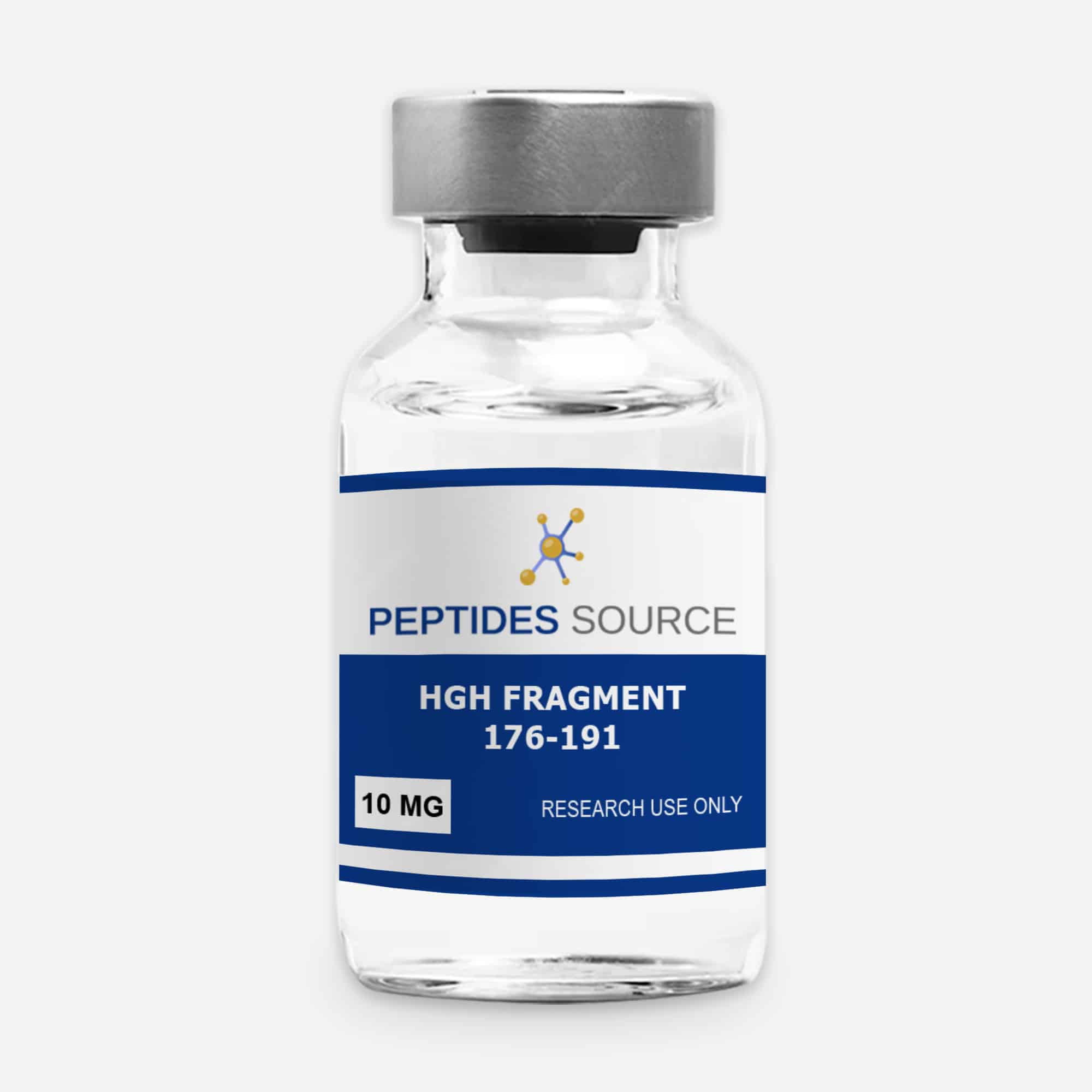
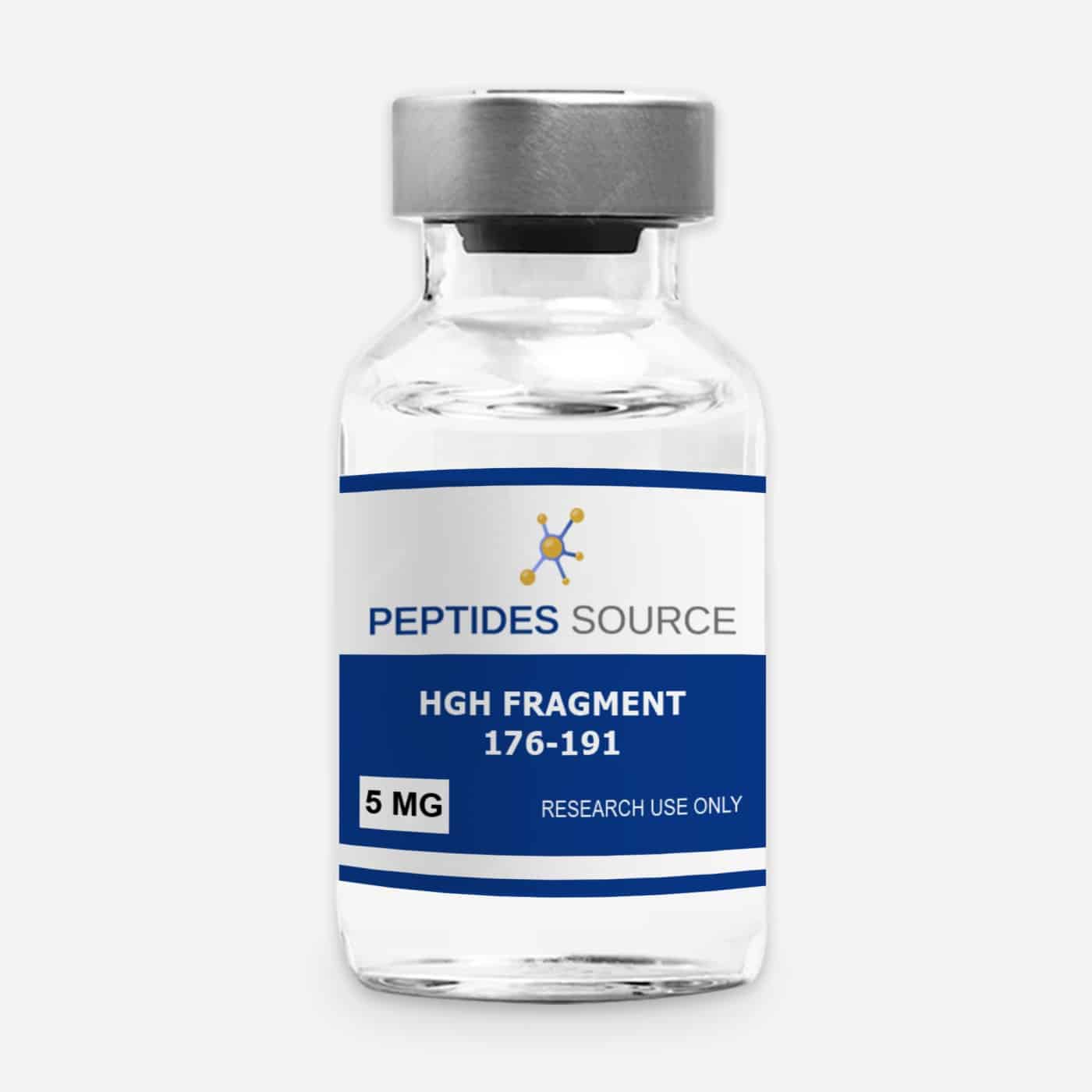
Three categories of “growth hormone” research material are routinely mixed up, and the distinction matters for study design. The first is intact somatropin, the full 191-amino-acid protein described above. The second is a fragment analog, most commonly HGH Fragment 176-191, which reproduces only a short C-terminal region of the molecule. The third is an entirely separate class, the growth hormone secretagogues, which are not growth hormone at all but compounds that act upstream on the growth-hormone axis.
Secretagogues fall into two families: agonists of the growth hormone secretagogue receptor (the receptor whose natural ligand is ghrelin) and agonists of the GHRH receptor. [2] Peptides such as CJC-1295, Sermorelin, Ipamorelin and GHRP-6 sit in these families and are studied through a different mechanism than the intact hormone. [2][3] Because intact somatropin and the secretagogues reach the same axis by different routes, they are frequently compared side by side in the literature.
| Research material | What it is | Category |
|---|---|---|
| HGH 191AA (Somatropin) | The full 191-amino-acid recombinant growth hormone | Intact protein |
| HGH Fragment 176-191 | A short C-terminal region of the molecule | Fragment analog |
| CJC-1295, Sermorelin | GHRH-receptor agonists acting upstream | Secretagogue |
| Ipamorelin, GHRP-6 | Ghrelin / GHS-receptor agonists acting upstream | Secretagogue |
Why researchers standardize on recombinant somatropin
The availability of recombinant human growth hormone from the mid-1980s replaced earlier pituitary-derived preparations and gave researchers a consistent, reproducible reference protein. [1] For a molecule used as a comparison standard, batch-to-batch consistency is not a nicety, it is the whole value proposition. That is why research-grade somatropin is verified to at least 98% purity by HPLC and shipped with a certificate of analysis, and why the source and testing chain behind each lot matters as much as the label.
Handling in the laboratory
Recombinant somatropin is supplied as a lyophilized (freeze-dried) powder for stability in storage and transit. Before study it is reconstituted using a suitable diluent such as a suitable research diluent or a suitable research diluent. Reconstituted material is generally refrigerated and protected from light, while sealed lyophilized vials are held frozen for longer-term storage. These are general handling notes for laboratory settings only.
How it fits the wider growth-hormone-axis literature
In practice, recombinant somatropin is rarely studied in isolation. It appears throughout the growth-hormone-axis literature alongside the secretagogues above and alongside metabolic and mitochondrial-derived peptides such as MOTS-c. Researchers comparing intact-hormone effects with secretagogue-driven pathways will often reference the full-length HGH 191AA (Somatropin) protein as the baseline, which is one reason the intact 191-amino-acid material remains a catalog staple.
Frequently asked questions
What does “191AA” actually mean?
It refers to the complete 191-amino-acid chain of human growth hormone, signalling the intact, full-length sequence rather than a fragment or modified analog.
Is HGH 191AA the same as somatropin?
Yes. “Somatropin” is the standard name for recombinant 191-amino-acid human growth hormone.
How is HGH 191AA different from HGH Fragment 176-191?
The fragment reproduces only a short C-terminal region of the molecule, whereas 191AA is the entire protein.
How is it different from peptides like CJC-1295 or Ipamorelin?
Those are growth hormone secretagogues that act upstream on the growth-hormone axis; they are not growth hormone itself.
What purity should research-grade somatropin be?
Look for at least 98% purity by HPLC with a certificate of analysis available for each batch.
References
- Somatropin (rDNA origin) prescribing information and structural description, U.S. Food and Drug Administration. accessdata.fda.gov
- Ishida J, et al. Growth hormone secretagogues: history, mechanism of action, and clinical development. JCSM Rapid Communications, 2020. onlinelibrary.wiley.com
- The development of growth hormone-releasing hormone analogs: therapeutic advances in cancer, regenerative medicine, and metabolic disorders. NCBI PMC. ncbi.nlm.nih.gov
For research use only. Not for human or veterinary use or consumption. This article is provided for scientific and educational purposes and is not medical advice.
Related research-use products: HGH 191AA Somatropin and the Qomatropin HGH 10IU kit. Explore more musculoskeletal and growth research peptides. For laboratory research use only.