
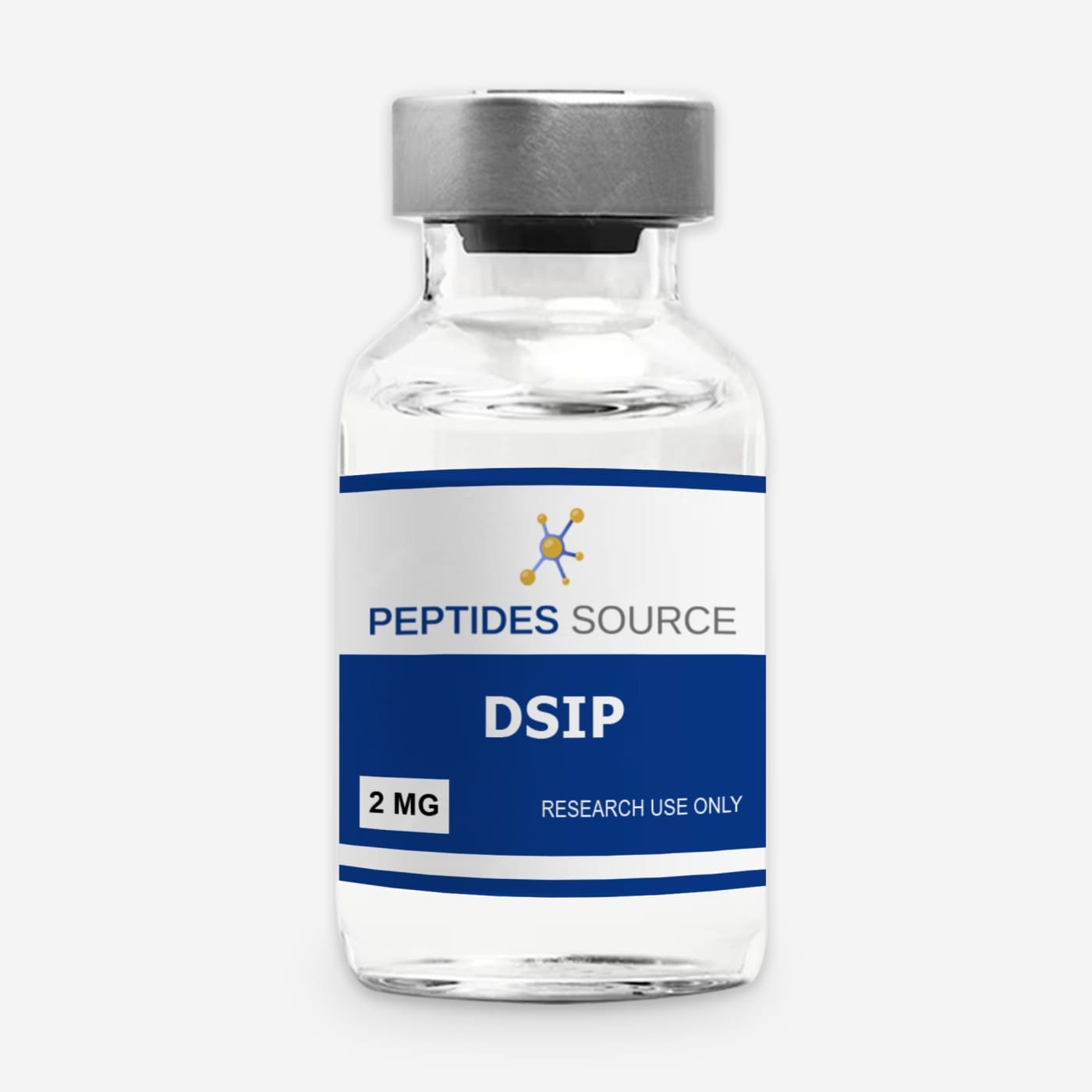


DSIP (Delta Sleep-Inducing Peptide) is a naturally occurring nonapeptide first isolated from the cerebral venous blood of sleeping rabbits in 1974. Preclinical research has since studied it for its role in sleep-wake cycle regulation, stress hormone modulation, and neuroendocrine signaling — making it one of the few endogenous neuropeptides with a documented multi-system preclinical profile. This profile covers DSIP’s structure, proposed mechanisms, and the preclinical evidence base — written for researchers and scientifically literate readers who want to understand the compound from the data up. DSIP belongs to the broader category of neuropeptide research compounds with documented CNS activity in preclinical systems. All information on this page is provided for research and educational purposes only. DSIP is not approved for human use by the FDA or any regulatory authority. It is intended solely for use in qualified laboratory settings by trained researchers.
Chemical Profile
DSIP is a nonapeptide — a chain of nine amino acids — with the sequence Trp-Ala-Gly-Gly-Asp-Ala-Ser-Gly-Glu (WAGGDASGE). It was first characterized by Schoenenberger, Maier, Tobler, and Monnier at the University of Basel and published in Pflügers Archiv in 1978, three years after its isolation from rabbit cerebral venous blood. The peptide is structurally simple relative to many research compounds in its class, but has demonstrated an unusual range of biological effects in preclinical systems beyond sleep modulation — including stress axis interactions, opioid system cross-talk, and antioxidant activity — which has made it a persistent subject of mechanistic investigation.
- Sequence: Trp-Ala-Gly-Gly-Asp-Ala-Ser-Gly-Glu (WAGGDASGE)
- Molecular formula: C35H48N8O15
- Molecular weight: 848.82 g/mol
- CAS number: 62568-57-4
- Classification: Endogenous neuropeptide / sleep-regulating peptide
- Research purity standard: ≥98% by HPLC
DSIP is an endogenous peptide — meaning it occurs naturally in the mammalian brain and has been detected in multiple species. Its endogenous status differentiates it from purely synthetic research peptides and suggests a physiological role, though the precise nature of that role remains under investigation. As an endogenous compound, it is also subject to rapid enzymatic degradation in biological systems, a factor that has complicated both its pharmacokinetic characterization and in vivo research design.
How DSIP Is Thought to Work
DSIP’s mechanism of action has not been fully characterized at the receptor level. Unlike compounds with a defined target — a specific receptor subtype or enzyme — DSIP appears to modulate multiple systems simultaneously, which has made its mechanistic profile complex to map. Current evidence points to several overlapping pathways:
Delta Wave Sleep Induction
The defining characteristic of DSIP in preclinical research is its association with increased delta-wave (slow-wave) activity in EEG recordings. Monnier and colleagues demonstrated that DSIP-containing perfusate from the thalamus of sleeping rabbits could induce delta-wave activity when administered to awake rabbits — the original finding that gave the peptide its name. Subsequent work by Schoenenberger and colleagues confirmed this effect across multiple rodent species using purified peptide, finding increases in slow-wave sleep (SWS) duration and delta power in EEG recordings following intracerebral or intravenous administration (Pflügers Archiv, 1978). The receptor or downstream target that mediates this effect has not been definitively identified. DSIP does not appear to act through GABA-A receptors in the manner of classical hypnotics, which has made it mechanistically distinct from benzodiazepines and non-benzodiazepine sleep compounds. Its interaction with the sleep-wake system remains an open research question.
HPA Axis and Stress Response Modulation
Beyond sleep, DSIP has been studied for its interactions with the hypothalamic-pituitary-adrenal (HPA) axis. Research has found that DSIP modulates corticotropin (ACTH) and corticosterone release in rodent models under stress conditions — suggesting a stress-buffering or stress-normalizing function distinct from its sleep effects. Graf and Kastin at the Tulane University School of Medicine extensively reviewed and catalogued these neuroendocrine interactions, finding DSIP effects on LH-RH, somatostatin, and other hypothalamic regulatory peptides (Neuroscience and Biobehavioral Reviews, 1984; PMID 6145137). This places DSIP within a broader area of research on neuropeptide regulation of the stress axis — an area that has also attracted attention in the context of longevity and aging research, given the well-documented relationship between chronic stress, HPA dysregulation, and biological aging.
Opioid System Interactions
A notable and initially unexpected finding in the DSIP literature is its interaction with opioid-related pathways. Animal model research found that DSIP administration reduced withdrawal symptoms in opiate-dependent rodents — an effect that pointed to cross-talk between the endogenous sleep regulatory system and the opioid system. The mechanism underlying this observation has been the subject of ongoing investigation and may involve modulation of endogenous opioid peptide availability or receptor sensitivity, though a direct binding interaction with opioid receptors has not been confirmed for DSIP itself.
Antioxidant and Cytoprotective Activity
More recent lines of DSIP research have examined antioxidant and cytoprotective properties. Studies in rodent tissue preparations found that DSIP inhibited lipid peroxidation and modulated reactive oxygen species (ROS) generation — findings consistent with a neuroprotective role. The tryptophan residue at position 1 of the DSIP sequence (Trp) is a likely contributor to antioxidant activity, as tryptophan and its metabolites are known radical scavengers. This line of investigation positions DSIP within the broader landscape of neuropeptide research focused on oxidative stress modulation in neural tissue.
Preclinical Research Findings
The DSIP research literature is substantial but concentrated primarily in the 1970s–1990s, with a more limited but ongoing body of work since then. The following summarizes key experimental findings across model systems:
Sleep Architecture Studies
Early EEG studies in rabbits and rats consistently demonstrated that DSIP administration increased slow-wave sleep and reduced sleep latency. These findings held across routes of administration (intracerebral, intravenous, intranasal) and across species, lending the effect a degree of biological robustness. However, replication in rodent models was not always consistent — some studies found dose-dependent effects while others found variable or absent sleep induction depending on circadian timing, baseline arousal state, and administration route. This variability has remained one of the central interpretive challenges in the DSIP literature.
Stress and Withdrawal Models
Studies using opiate withdrawal paradigms in rats found that DSIP administration reduced the severity of withdrawal signs including agitation, piloerection, and stereotyped behaviors. Kastin and colleagues at the Veterans Administration Medical Center in New Orleans examined DSIP and its analogs across multiple stress-related paradigms, finding effects on both behavioral and physiological stress indicators (PMID 6145137).
Analgesic Properties
Several studies examined DSIP in standard rodent pain paradigms — including hot plate test and tail-flick assay — finding modest but detectable analgesic effects. These effects were generally not naloxone-reversible, suggesting they are not primarily mediated through classical opioid receptor binding and may represent an independent mechanism or opioid-system interaction at a site other than the classical mu, delta, or kappa receptors. Central administration of DSIP has also produced antinociception in preclinical pain assays (PMID 2853064).
Neuroendocrine Effects
DSIP has demonstrated effects on multiple hypothalamic regulatory peptides in preclinical models — including modulation of ACTH release, LH-RH activity, and somatostatin levels. These effects suggest that DSIP may function as a broad neuromodulator of hypothalamic output rather than a specific sleep-inducing signal, which would account for its unusually diverse preclinical profile. Graf and Kastin’s 1986 follow-up review of the DSIP literature catalogued over 100 published studies on the compound and emphasized this neuromodulatory breadth as the defining feature of its research profile (PMID 3550726).
Circadian Rhythm Research
Because DSIP levels fluctuate across the sleep-wake cycle and are detectable in human plasma and cerebrospinal fluid, it has been studied as a potential marker and modulator of circadian rhythm biology. Research found plasma DSIP levels to be highest during slow-wave sleep and lowest during waking periods — a pattern consistent with a functional role in sleep regulation, though causality versus correlation remains unresolved.
Research Purity Standards and Quality Verification
As with all research peptides, DSIP purity is a critical determinant of experimental reproducibility. Research-grade DSIP should meet the following minimum specifications:
- HPLC purity: ≥98% by reverse-phase HPLC, with chromatogram and peak integration data included in the COA
- Identity confirmation: Mass spectrometry verifying observed molecular weight of 848.82 g/mol within acceptable tolerance
- Third-party COA: Independent laboratory testing rather than solely in-house QC, eliminating conflicts of interest in purity reporting
- Sequence verification: Amino acid analysis or sequencing confirmation for a nonapeptide of this complexity
Peptides Source supplies DSIP at ≥98% HPLC purity with third-party certificate of analysis documentation for each lot. For guidance on evaluating peptide supplier quality standards, see the researcher’s guide to selecting a reliable research peptide source.
Laboratory Preparation and Handling
Reconstitution
DSIP is typically reconstituted in the laboratory using a suitable research diluent. For multi-use preparations in in vivo research, a suitable research diluent (0.9% benzyl alcohol in laboratory-grade water) is appropriate and inhibits microbial growth over the vial’s use period. Researchers should consult the standard research peptide reconstitution protocol for step-by-step guidance on lyophilized peptide preparation, working dilution calculation, and sterile technique. As an endogenous nonapeptide, DSIP is susceptible to enzymatic degradation by serine proteases and aminopeptidases. This should be accounted for in experimental design, particularly in ex vivo and in vitro assays where tissue-derived enzymes may be present. Adding protease inhibitors to working buffers is standard practice in DSIP research.
Storage Recommendations
- Lyophilized (unreconstituted): Store at −20°C in a sealed, desiccated container protected from light.
- Reconstituted in a suitable research diluent: Refrigerate at 2–8°C; use within 28–30 days.
- Long-term reconstituted storage: Aliquot at −80°C; avoid repeated freeze-thaw cycles, which accelerate degradation of the tryptophan residue.
- Working solutions: Prepare immediately before use from refrigerated or thawed stock; minimize exposure to light (tryptophan is photosensitive).
Limitations and Open Research Questions
- No confirmed receptor target: Despite five decades of research, DSIP’s primary molecular target — the receptor or enzyme that initiates its downstream effects — has not been definitively identified. This limits mechanistic interpretation of all downstream findings.
- Inconsistent replication: Sleep induction effects, while widely reported, have not replicated with the same consistency across all research groups and model systems. Dose, route, timing, and baseline arousal state all appear to influence outcomes significantly.
- Metabolic instability: Rapid enzymatic degradation in biological systems complicates pharmacokinetic characterization and may account for variability in in vivo studies. The actual active species — intact DSIP or a degradation fragment — has not been definitively established in all experimental contexts.
- Literature age: The peak of DSIP research occurred between 1974 and 1995. While the literature is substantial, much of it predates modern molecular pharmacology techniques. There is limited integration with contemporary receptor pharmacology, transcriptomics, or proteomics approaches.
- No FDA/EMA clinical review: DSIP has not undergone regulatory review for any indication by the FDA, EMA, or comparable Western regulatory body. No approved clinical uses exist outside research contexts.
Frequently Asked Questions: DSIP Peptide Research
What is DSIP peptide and what is it used for in research?
DSIP (Delta Sleep-Inducing Peptide) is an endogenous nonapeptide (WAGGDASGE) originally isolated from rabbit cerebral venous blood. In research, it is used to study slow-wave sleep regulation, HPA axis modulation, opioid system cross-talk, and antioxidant activity in preclinical models. It is sold strictly for research use only and is not approved for any medical application.
How does DSIP induce delta wave sleep in animal models?
The precise receptor mechanism has not been established. EEG studies in rabbits and rodents consistently show DSIP-associated increases in delta-wave power and slow-wave sleep duration, but DSIP does not act through classical GABA-A or benzodiazepine binding sites. The downstream pathway connecting DSIP to delta oscillation is an active area of investigation and remains unresolved.
Is DSIP an endogenous peptide?
Yes. DSIP has been detected in mammalian brain tissue, plasma, and cerebrospinal fluid across multiple species including humans. Its plasma levels fluctuate with the sleep-wake cycle — highest during slow-wave sleep, lowest during waking. This endogenous presence supports a physiological role in sleep regulation, though the precise function remains incompletely characterized.
What is the relationship between DSIP and the HPA axis?
Preclinical research has documented DSIP effects on ACTH release, corticosterone levels, and hypothalamic regulatory peptides including LH-RH and somatostatin. This suggests DSIP functions as a neuromodulator with broad influence over hypothalamic output — not simply a narrow sleep-inducing signal — which accounts for its wide-ranging preclinical profile beyond sleep biology.
What research models are used to study DSIP?
Standard approaches include EEG recording for sleep architecture analysis (delta power, SWS duration, sleep latency); opiate withdrawal paradigms for stress and opioid system interactions; hot plate and tail-flick tests for analgesic effects; ELISA and RIA for plasma DSIP quantification; and in vitro oxidative stress assays for antioxidant research.
Why has DSIP research been inconsistent across studies?
Several factors contribute: rapid enzymatic degradation means the active species may vary by preparation; dose-response curves are non-linear; timing relative to circadian phase significantly affects outcomes; and the absence of a confirmed receptor target makes it difficult to design mechanistically controlled studies. Route of administration also affects bioavailability substantially.
What purity standard should research-grade DSIP meet?
≥98% purity by reverse-phase HPLC, with identity confirmed by mass spectrometry verifying MW of 848.82 g/mol (CAS 62568-57-4). Third-party COA documentation from an independent laboratory is the expected verification standard. Peptides Source provides third-party COA for each lot.
How should DSIP be stored and reconstituted for laboratory use?
Lyophilized DSIP: store at −20°C, protected from light (tryptophan-containing peptides are photosensitive). Reconstitute in a suitable research diluent, PBS, or a suitable research diluent. Refrigerate at 2–8°C for short-term use; aliquot at −80°C for longer storage. Include protease inhibitors in working buffers when tissue-derived enzymes may be present.
Summary and Research Context
DSIP occupies a distinctive position in neuropeptide research: it is endogenous, with detectable fluctuations tied to sleep-wake biology; it has a fifty-year published literature; and it has demonstrated preclinical effects across sleep, stress, opioid, and antioxidant systems that have proven difficult to unify under a single mechanistic explanation. The absence of a confirmed receptor target is simultaneously the field’s central limitation and its primary open research question. For researchers studying sleep architecture, HPA axis regulation, or neuropeptide neuromodulation, DSIP remains a compound with an unusually broad and historically deep evidence base. Its endogenous nature, combined with its multi-system activity, continues to attract investigation into whether it represents a regulatory node in the intersection of sleep, stress, and aging biology. Peptides Source supplies research-grade DSIP at ≥98% HPLC purity with third-party COA documentation, manufactured under cGMP/ISO-compliant conditions for qualified laboratory use.
References
- Schoenenberger GA, Maier PF, Tobler HJ, Monnier M. A naturally occurring delta-EEG enhancing nonapeptide in rabbits. X. Final isolation, characterization and activity test. Pflügers Archiv. 1978;376(2):119–127.
- Graf MV, Kastin AJ. Delta-sleep-inducing peptide (DSIP): a review. Neuroscience and Biobehavioral Reviews. 1984;8(1):83–93. PMID 6145137
- Nakamura A, et al. Potent antinociceptive effect of centrally administered delta-sleep-inducing peptide (DSIP). Eur J Pharmacol. 1988;155(3):247–253. PMID 2853064
- Graf MV, Kastin AJ. Delta-sleep-inducing peptide (DSIP): an update. Peptides. 1986;7(6):1165–1187. PMID 3550726
- Kovalzon VM, Strekalova TV. Delta sleep-inducing peptide (DSIP): a still unresolved riddle. Journal of Neurochemistry. 2006;97(2):303–309. PMID 16539679
- Khvatova EM, Rubanova NA, Prudchenko IA, Mikhaleva II. Delta sleep inducing peptide (DSIP): effect on respiration activity in rat brain mitochondria and stress protective potency under experimental hypoxia. Peptides. 2003;24(2):307–311. PMID 12668217
Research Use Only. DSIP is supplied by Peptides Source strictly for in vitro research and laboratory use by qualified investigators. It is not intended for human or veterinary use, self-administration, or therapeutic application. This content is educational and does not constitute medical advice. Users are responsible for compliance with all applicable local, state, and federal regulations governing the use of research compounds.