
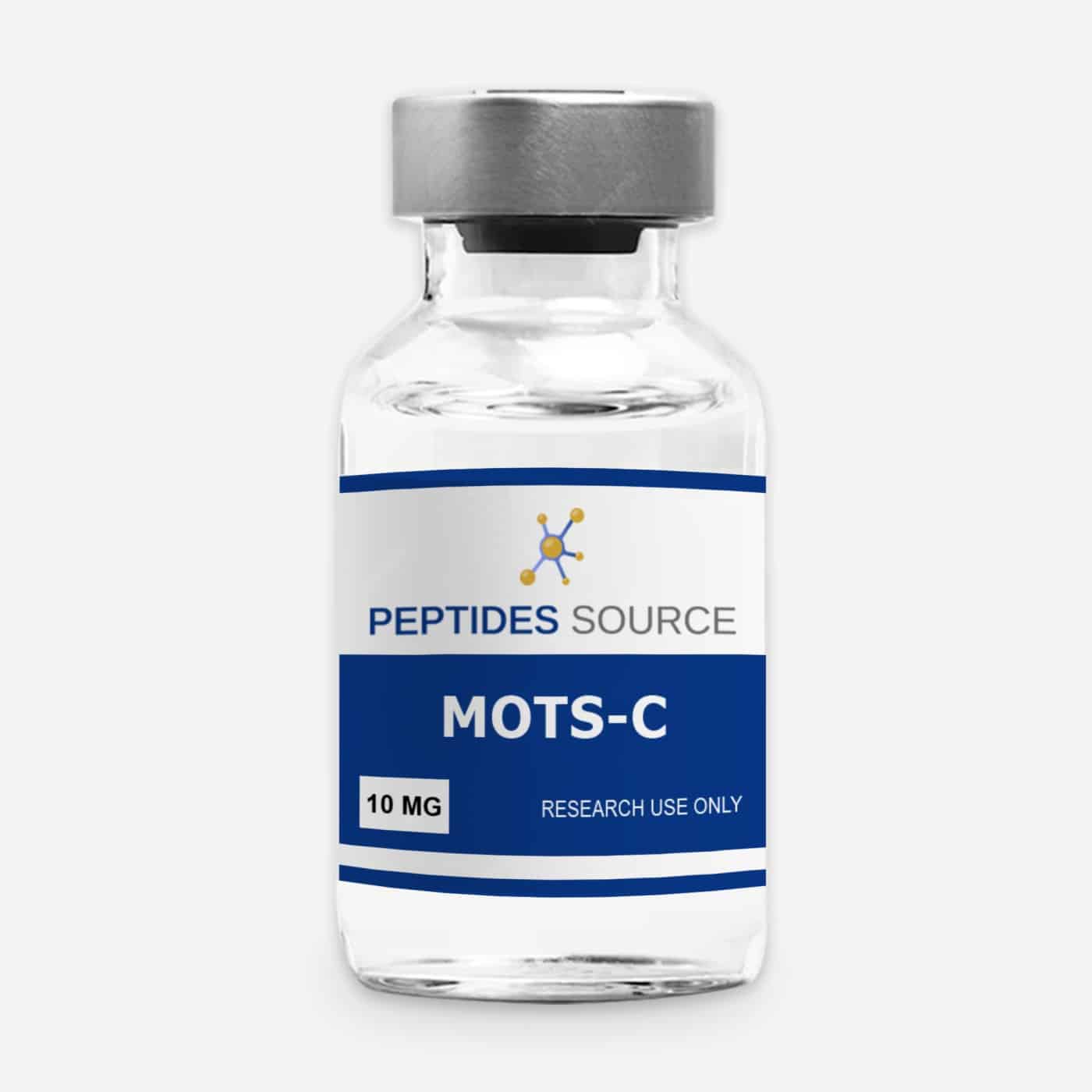


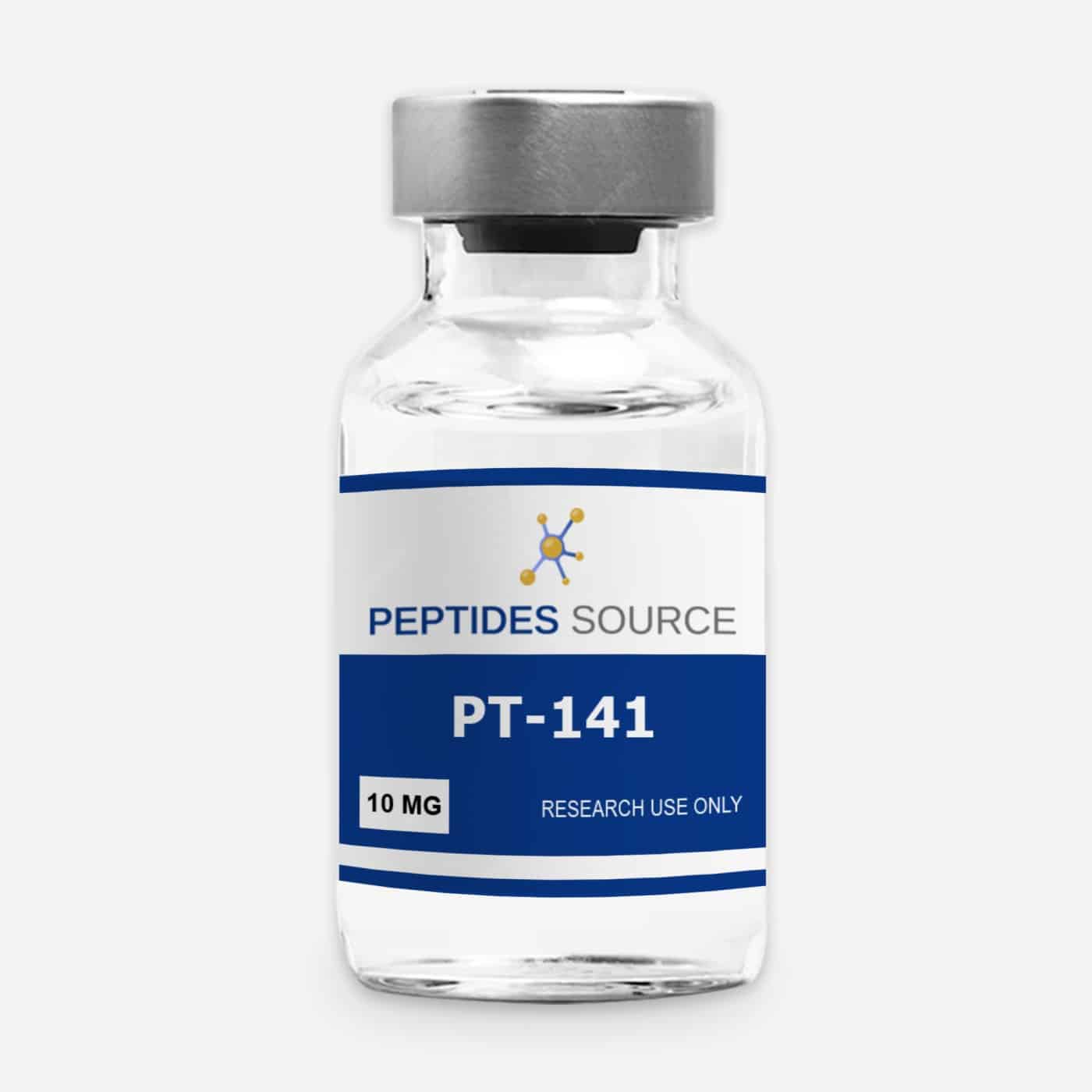


This page is about one thing: what the compound in our Melanotan 2 research vials is as a molecule and how it behaves at the melanocortin receptor family in laboratory systems. It sets out the cyclic structure, the receptor subtypes it engages, the second messenger those receptors use, and the structural relationship between this compound and the more selective melanocortin probes it is often compared with. It is written for qualified researchers working with in vitro and controlled animal-model systems, and it describes molecular and research characteristics only.
All compounds discussed are intended strictly for in vitro research and laboratory use. Not for human or animal consumption. This page describes receptor pharmacology in laboratory systems only and makes no cosmetic, physiological, therapeutic or outcome claims of any kind.
The short version
- Melanotan 2 is a cyclic heptapeptide, closed by a lactam bridge, not a linear sequence.
- It is a non-selective melanocortin receptor agonist, engaging MC1R, MC3R, MC4R and MC5R rather than preferring one subtype. MC2R is not engaged, because it responds to ACTH rather than to MSH peptides.
- Melanocortin receptors are class A GPCRs coupled to Gs, so the standard laboratory readout is cAMP accumulation.
- PT-141 is its C-terminal deamidated form. Their formulas differ across three elements, one nitrogen and one hydrogen fewer and one oxygen more, from that single terminal change, and their masses by about one dalton.
- It is an analog of alpha-MSH, one of the endogenous melanocortin ligands, and retains that family’s conserved pharmacophore.
- For research use only. Not for human or veterinary use or consumption.
Structure: the ring is the point
Melanotan 2 is a cyclic peptide, and that is the most important thing about it structurally.
The sequence is Ac-Nle-Asp-His-D-Phe-Arg-Trp-Lys-NH2, closed by a lactam bridge between residues 2 and 7, linking the aspartate side chain to the lysine side chain. Three deliberate design features sit on top of that ring: the N-terminus is acetylated, the C-terminus is amidated, and the phenylalanine at position 4 is the D-isomer rather than the L-form found in natural proteins.
Each of those does specific work. The lactam bridge removes most of the conformational freedom a linear heptapeptide would have, so the molecule presents a defined shape to the receptor instead of sampling many. The D-amino acid and the two capped termini all make the peptide a poorer substrate for proteases. This is an engineered molecule, not a natural fragment.
Running through positions 3 to 6 is the His-Phe-Arg-Trp motif, the conserved melanocortin pharmacophore that also appears in alpha-melanocyte-stimulating hormone. That shared motif is why the compound engages melanocortin receptors at all; the cyclic scaffold around it is what determines how selectively.
Melanotan 2: molecular profile
| Research criterion | Value |
|---|---|
| Class | Synthetic cyclic heptapeptide, alpha-MSH analog |
| Also known as | Melanotan II, MT-2 |
| Sequence | Ac-Nle-Asp-His-D-Phe-Arg-Trp-Lys-NH2 |
| Cyclization | (2 to 7) lactam bridge |
| Molecular formula | C50H69N15O9 |
| Molecular weight | 1,024.2 g/mol |
| CAS number | 121062-08-6 |
| PubChem CID | 92432 |
| Receptor targets | MC1R, MC3R, MC4R and MC5R; non-selective across those four |
| Receptor class | Class A G-protein-coupled receptors, Gs coupled |
| Endogenous counterpart | Alpha-melanocyte-stimulating hormone, PubChem CID 16133793 |
| Form supplied | Lyophilized powder |
The melanocortin receptor family
There are five melanocortin receptors, MC1R through MC5R. All five are class A G-protein-coupled receptors, all five couple principally to Gs, and all five therefore raise intracellular cAMP when activated. What separates them is tissue expression and ligand preference.
This is where Melanotan 2’s profile matters. It is described as non-selective: it engages MC1R, MC3R, MC4R and MC5R broadly rather than preferring one subtype. MC2R is the exception and is not engaged, because it responds to ACTH rather than to the MSH peptides. For a tool compound that breadth is a defined property with a defined consequence.
A non-selective agonist is the wrong probe for attributing a signal to one receptor and the right probe for asking family-level questions. If an experiment needs to know which subtype is responsible for an observed response, a broad agonist cannot answer it; a selective one, or a selective antagonist used alongside, is required. If the question is about melanocortin signaling as a system, breadth is an advantage.
Which compound belongs in which experiment is set out directly in Weirath and Haskell-Luevano, 2024, a review of recommended tool compounds for these receptors. The wider set of melanocortin ligands, natural and synthetic, is surveyed in Yuan and Tao, 2022.
What each subtype is studied for
| Subtype | Principal research context |
|---|---|
| MC1R | Melanocyte biology; melanin synthesis as an in vitro cellular endpoint |
| MC2R | Adrenocortical signaling; responds to ACTH rather than to MSH peptides |
| MC3R | Central melanocortin system; energy-homeostasis signaling |
| MC4R | Central melanocortin system; the most heavily studied CNS subtype |
| MC5R | Exocrine tissue signaling |
Downstream signaling: what is actually measured
Because melanocortin receptors couple to Gs, agonist binding activates adenylyl cyclase and raises cAMP. cAMP accumulation is therefore the standard functional readout, and it is what most published potency figures for these compounds describe.
The PT-141 relationship, stated precisely
Melanotan 2 and PT-141 are routinely discussed together, and the relationship between them is specific rather than approximate.
Structurally, PT-141 is the C-terminal deamidated form of Melanotan 2. Chemically, the C-terminal amide of Melanotan 2 becomes a free acid. That single change is visible in the formula. Converting a terminal amide to a free acid removes an NH2 group and adds an OH, so the formula loses one nitrogen and one hydrogen and gains one oxygen.
| Criterion | Melanotan 2 | PT-141 |
|---|---|---|
| Database name | Melanotan II | Bremelanotide |
| C-terminus | Amidated | Free acid, deamidated |
| Molecular formula | C50H69N15O9 | C50H68N14O10 |
| Molecular weight | 1,024.2 g/mol | 1,025.2 g/mol |
| CAS number | 121062-08-6 | 189691-06-3 |
| PubChem CID | 92432 | 9941379 |
| Cyclic scaffold | (2 to 7) lactam bridge | (2 to 7) lactam bridge |
| Receptor profile | Non-selective across MC1R, MC3R, MC4R, MC5R | Preference for MC3R and MC4R, weaker at MC1R |
The two masses differ by roughly one dalton. That is a small separation for a mass spectrometry identity check, and it is the reason a certificate of analysis on either compound should state which molecule it describes rather than leaving it to be inferred from a rounded figure. For the more selective probe, see our PT-141 mechanism of action profile.
For comparative receptor work the pair is genuinely useful: two closely related cyclic melanocortin agonists differing at one defined position, one broad and one more selective, is a cleaner comparison than most of what is available in this receptor family.
How it is used as a research tool
- Binding assays across MC1R through MC5R, to establish a family-wide affinity profile.
- Functional cAMP assays in cells expressing a single recombinant subtype, to separate potency from affinity.
- Comparative ligand studies against PT-141, alpha-MSH and other melanocortin analogs, to map which structural features drive subtype preference.
- Reference agonist in assays where a broad melanocortin response is needed as a positive control.
Melanotan 2 sits within the broader melanocortin research category, and its provenance is documented the same way as the rest of our US-made research catalog.
Verification: what a certificate should tell you
- Purity verified by HPLC, with the figure recorded on a batch-specific certificate of analysis tied to your lot number
- Identity confirmed by mass spectrometry against the expected mass of 1,024.2 g/mol
- Which molecule, stated explicitly. Melanotan 2 and PT-141 differ by about one dalton, so a rounded mass alone does not separate them and the compound name must be unambiguous
- Cyclization confirmed. The lactam bridge forms during synthesis, and an uncyclized linear impurity has a different mass from the closed ring, so a correctly reported mass also confirms the ring closed
- Third-party testing, independent of the supplier
- Documented sourcing, US-based, for traceability
Peptides Source supplies Melanotan 2 at 98 percent or higher purity by HPLC with third-party batch documentation. For the criteria to apply to any supplier, see our guide to choosing a reliable peptide source.
Handling in the laboratory
Supplied as a lyophilized powder and reconstituted before study.
- Reconstitution: use a diluent appropriate to the assay, commonly bacteriostatic water. Confirm solubility in the intended vehicle before preparing working solutions.
- Storage, lyophilized: sealed vial frozen at approximately -20 degrees Celsius, protected from light and moisture.
- Storage, reconstituted: refrigerated at 2 to 8 degrees Celsius, aliquoted to avoid repeated freeze-thaw cycles, used within a short window.
The constrained ring, the D-amino acid and the two capped termini make this peptide less susceptible to proteolysis than a linear all-L sequence, but that is a statement about proteolytic stability rather than about storage. Handling standards are unchanged.
Frequently asked questions
What is Melanotan 2?
Melanotan 2 is a synthetic cyclic heptapeptide. It is an analog of alpha-MSH, one of the endogenous melanocortin ligands, and its sequence is Ac-Nle-Asp-His-D-Phe-Arg-Trp-Lys-NH2 closed by a lactam bridge between residues 2 and 7. Its molecular weight is 1,024.2 g/mol. In research it is used as a non-selective agonist across MC1R, MC3R, MC4R and MC5R. It is supplied strictly for in vitro and laboratory research.
Which receptors does Melanotan 2 act on?
It is described as non-selective across MC1R, MC3R, MC4R and MC5R. These are class A G-protein-coupled receptors that couple principally to Gs. MC2R is the exception within the family and is not engaged, because it responds to ACTH rather than to the MSH peptides that Melanotan 2 is an analog of.
What second messenger does a melanocortin assay measure?
cAMP. Melanocortin receptors couple to Gs, so agonist binding activates adenylyl cyclase and raises intracellular cAMP, and cAMP accumulation is the standard functional readout.
How is Melanotan 2 related to PT-141?
PT-141 is the C-terminal deamidated form of Melanotan 2, filed in PubChem under the name bremelanotide. The C-terminal amide becomes a free acid, which changes the formula from C50H69N15O9 to C50H68N14O10 and the mass from 1,024.2 to 1,025.2 g/mol. Both retain the same cyclic scaffold and the conserved His-Phe-Arg-Trp pharmacophore.
Why does it matter that Melanotan 2 is cyclic?
The lactam bridge between residues 2 and 7 restricts the backbone’s conformational freedom, so the molecule presents a defined shape to the receptor rather than sampling many. Together with the acetylated N-terminus, the amidated C-terminus and the D-phenylalanine, the ring also makes the peptide a poorer substrate for proteases than an equivalent linear sequence.
What does non-selective mean for experimental design?
It means the compound engages MC1R, MC3R, MC4R and MC5R broadly rather than preferring one subtype, so it cannot be used on its own to attribute an observed signal to a single receptor. It suits family-level questions and reference-agonist roles. Isolating one subtype requires a selective agonist, or a selective antagonist used alongside.
What purity should research-grade Melanotan 2 meet?
Verified by HPLC at 98 percent or higher on a batch-specific certificate of analysis, with identity confirmed by mass spectrometry against the expected 1,024.2 g/mol. Because Melanotan 2 and PT-141 differ by about one dalton, the certificate should name the compound unambiguously rather than relying on a rounded mass.
How is Melanotan 2 stored and handled?
Supplied as a lyophilized powder and reconstituted in the laboratory, typically in bacteriostatic water. Sealed lyophilized vials are stored frozen at approximately -20 degrees Celsius and protected from light and moisture. Reconstituted material is refrigerated at 2 to 8 degrees Celsius, aliquoted to avoid repeated freeze-thaw cycles, and used within a short window.
References
- US National Library of Medicine, PubChem. Compound record: Melanotan II, CID 92432.
- Weirath NA, Haskell-Luevano C. Recommended tool compounds for the melanocortin receptor G protein-coupled receptors. ACS Pharmacol Transl Sci. 2024;7(9):2706-2724. PMID 39296259.
- Yuan XC, Tao YX. Ligands for melanocortin receptors: beyond melanocyte-stimulating hormones and adrenocorticotropin. Biomolecules. 2022;12(10):1407. PMID 36291616.
Peptides Source supplies research compounds for in vitro and laboratory research only. Nothing on this page is a recommendation for human or veterinary use. All products are sold strictly for research purposes and are not for human or animal consumption. Must be 21+ to purchase.