


























































































































































FOR RESEARCH USE ONLY The content in this article is for educational and informational purposes only, based on published scientific literature and industry standards. The compounds discussed are not FDA-approved for human or veterinary use and are strictly intended for in-vitro laboratory research by qualified professionals. Peptides Source does not endorse or support the use of these compounds outside of a controlled research environment. Nothing in this article constitutes medical advice.
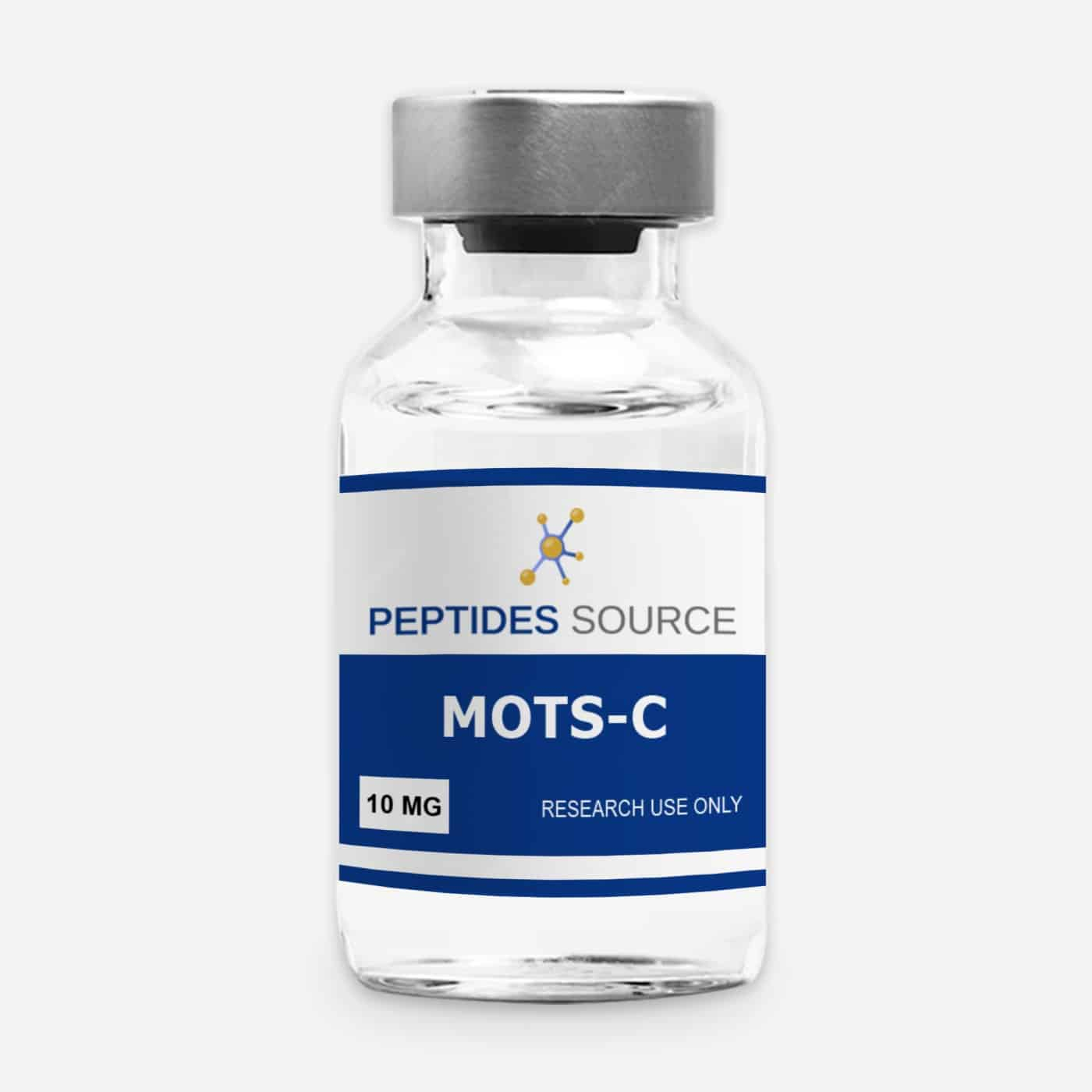
Mitochondria have long been characterized as the energy-producing organelles of the cell, but a growing body of research has revealed that they also function as active signaling platforms. Among the research peptides emerging from this field is MOTS-c, a 16-amino acid peptide encoded within the mitochondrial genome – specifically within the 12S rRNA gene. Since its identification in 2015, MOTS-c research has attracted significant attention in preclinical science for the peptide’s involvement in cellular energy regulation and metabolic signaling pathways.
Despite the rapid accumulation of published literature, MOTS-c remains a relatively novel compound with much of its mechanistic profile still under investigation. Researchers have noted that circulating MOTS-c levels appear to decline with age in both rodent and human observational studies, raising questions about its potential role in age-related metabolic changes. However, the precise physiological significance of these observations has not been fully established, and the compound’s mechanisms of action continue to be explored in controlled laboratory settings.
This article provides a research-focused overview of MOTS-c, covering its molecular structure, its documented interactions with the AMPK signaling pathway, its role in mitonuclear communication, and the preclinical models in which it has been investigated. All findings discussed are drawn from peer-reviewed literature and are presented within a research-use-only framework.
Key Takeaways
- MOTS-c is a 16-amino acid mitochondrial-derived peptide (MDP) encoded within the 12S rRNA gene of mitochondrial DNA, first characterized by Lee et al. in 2015.
- Preclinical studies have observed that MOTS-c activates the AMPK signaling pathway, a central regulator of cellular energy homeostasis.
- MOTS-c has been documented to translocate from the mitochondria to the nucleus under metabolic stress, suggesting a role in mitonuclear communication.
- Circulating MOTS-c levels have been observed to decline with age in both rodent models and human observational cohorts.
- All MOTS-c research discussed in this article is based on preclinical and observational data – no therapeutic claims are made or implied.
What Is MOTS-c? Molecular Profile and Discovery
MOTS-c (Mitochondrial Open Reading Frame of the Twelve S rRNA Type-c) was first described in a landmark 2015 publication by Lee et al. in the journal Cell Metabolism (PubMed: 25738459). The peptide consists of 16 amino acids (MRWQEMGYIFYPRKLR) and is encoded within the mitochondrial 12S rRNA gene, making it part of a broader class of compounds known as mitochondrial-derived peptides (MDPs).
MDPs represent a paradigm shift in how researchers understand mitochondrial function. Prior to the discovery of humanin in 2001 and MOTS-c in 2015, the mitochondrial genome was not thought to encode bioactive peptides with signaling functions. MOTS-c joined humanin and the small humanin-like peptides (SHLPs) as the third major class of MDPs identified in the literature (Cobb et al., 2016). Unlike humanin, which is encoded within the 16S rRNA gene, MOTS-c originates from a distinct open reading frame and has been investigated for its distinct signaling profile in metabolic research models.
The peptide has been detected in various tissues in rodent models, including skeletal muscle, and has also been measured in human plasma samples, though its endogenous regulation and tissue-specific expression patterns remain areas of active MOTS-c research.
MOTS-c and the AMPK Signaling Pathway
One of the most consistently documented observations in MOTS-c research involves its interaction with AMP-activated protein kinase (AMPK), a key enzyme in cellular energy sensing. AMPK is activated when the AMP-to-ATP ratio increases within cells, triggering downstream pathways that regulate glucose uptake, fatty acid oxidation, and mitochondrial biogenesis.
In the original characterization study, Lee et al. (2015) (PubMed: 25738459) reported that MOTS-c administration in mouse models was associated with AMPK pathway activation in skeletal muscle tissue. The researchers observed that this activation appeared to involve upstream modulation of the folate cycle and de novo purine biosynthesis, leading to accumulation of the metabolite AICAR – an endogenous AMPK activator. This proposed mechanism distinguishes MOTS-c from direct pharmacological AMPK activators, as the peptide appears to influence the pathway through metabolic intermediates rather than direct kinase binding.
Subsequent studies have replicated AMPK activation observations in multiple cell lines and rodent models, though the precise molecular interactions at each step of this signaling cascade remain under investigation. It is important to note that these findings are derived from controlled laboratory conditions, and their translation to other contexts has not been established.
Mitonuclear Communication: MOTS-c as a Retrograde Signaling Peptide
Perhaps the most scientifically notable aspect of MOTS-c research is the observation that the peptide can translocate from the mitochondria to the nucleus under conditions of metabolic stress. Kim et al. (2018) (PubMed: 30043753) published data in Cell Metabolism demonstrating that MOTS-c accumulates in the nucleus following glucose restriction and oxidative stress in cell culture models.
This nuclear translocation is significant from a cell biology perspective because it suggests a direct retrograde signaling function – meaning the mitochondria may communicate with the nuclear genome through a peptide messenger. Once in the nucleus, MOTS-c was observed to interact with transcription factors involved in antioxidant response element (ARE) pathways, including components of the Nrf2 signaling axis (Kim et al., 2018). These observations have led researchers to categorize MOTS-c as a potential “mitokine” – a mitochondria-derived molecule that participates in intercellular and intracellular communication.
This retrograde signaling model positions MOTS-c within a broader research framework examining how mitochondrial function influences nuclear gene expression. Other longevity research compounds, including humanin and Epithalon, are also being studied for their roles in age-related cellular signaling, though each operates through distinct molecular mechanisms.
MOTS-c in Preclinical Metabolic Research Models
Multiple rodent studies have examined MOTS-c in the context of metabolic research. In diet-induced obesity models, Lee et al. (2015) (PubMed: 25738459) observed that MOTS-c administration was associated with changes in body composition metrics and glucose homeostasis markers in mice fed a high-fat diet. These observations were made under controlled experimental conditions with specific dosing protocols in murine models.
Reynolds et al. (2021) (PubMed: 33473109) further examined MOTS-c in the context of exercise physiology research, reporting that circulating MOTS-c levels appeared to increase following physical activity in both rodent models and a small human observational cohort. The researchers proposed that MOTS-c may function as an exercise-responsive mitokine, though the study authors noted that larger controlled investigations would be required to characterize this relationship further.
Additional preclinical work has examined MOTS-c in ovariectomized mouse models. D’Souza et al. (2020) (PubMed: 32229705) reported observations related to skeletal muscle composition and metabolic parameters in this model system, though the researchers emphasized that these findings remained preliminary and required replication.
It is critical to emphasize that all metabolic observations involving MOTS-c are derived from animal models or small-scale observational human data. No controlled clinical trials have been published, and these preclinical findings do not establish any clinical application.
MOTS-c in Aging and Longevity Research
The intersection of MOTS-c research and aging biology has generated considerable interest in the scientific literature. Several observational studies have reported that circulating MOTS-c levels decline with age. Zempo et al. (2021) (PubMed: 33461167) analyzed plasma MOTS-c concentrations in a Japanese cohort and reported a negative correlation between MOTS-c levels and chronological age.
From a mechanistic standpoint, researchers have noted that MOTS-c’s documented interactions with AMPK, the folate cycle, and nuclear translocation pathways overlap with several cellular processes implicated in aging research – including mitochondrial dysfunction, altered nutrient sensing, and epigenetic regulation. These overlapping pathways have led some researchers to include MOTS-c in broader investigations of mitochondrial peptide biology alongside other compounds such as NAD+ precursors and SLU-PP-332.
However, it is essential to distinguish between observational correlations and established mechanistic relationships. The decline of circulating MOTS-c with age has been documented, but whether this decline is causally related to any age-associated process has not been demonstrated. Longitudinal interventional studies in appropriate model systems remain necessary to advance MOTS-c research in this area.
Current Limitations and Research Gaps
Despite the growing body of published literature, MOTS-c research faces several important limitations that must be acknowledged. First, the vast majority of interventional data comes from rodent models, and the translational relevance of these findings has not been validated. The pharmacokinetics of MOTS-c – including its half-life, tissue distribution, and degradation pathways – are not fully characterized in any species.
Second, there is no standardized analytical method for measuring circulating MOTS-c in biological samples. Different research groups have used varying ELISA-based assays with differing sensitivities and specificities, which complicates cross-study comparisons in MOTS-c research. Third, the endogenous regulation of MOTS-c expression – including what signals upregulate or downregulate its production within the mitochondria – remains poorly understood.
Finally, all commercially available MOTS-c is synthetic and intended for research use only. Researchers evaluating MOTS-c for laboratory studies should verify compound purity through independent Certificates of Analysis (COAs) and HPLC documentation to ensure batch-to-batch consistency. USA-made peptides manufactured under GMP-compliant conditions provide the quality benchmarks that rigorous research protocols require.
The Expanding Role of MOTS-c in Mitochondrial Peptide Research
MOTS-c represents a compelling addition to the growing catalog of mitochondrial-derived peptides under active investigation. Its documented interactions with the AMPK signaling axis, its nuclear translocation under metabolic stress, and its age-associated decline in circulating levels have positioned it as a compound of significant interest in metabolic and longevity-focused MOTS-c research. As analytical methods improve and additional preclinical studies are published, the understanding of this 16-amino acid peptide’s role in cellular signaling will continue to evolve.
For researchers investigating mitochondrial-derived peptides, verified compound purity and documented manufacturing standards remain essential to producing reliable, reproducible data. Laboratories seeking to explore the MOTS-c research compound can review detailed compound specifications and purity documentation through established research peptide suppliers.
FOR RESEARCH USE ONLY The content in this article is for educational and informational purposes only, based on published scientific literature and industry standards. The compounds discussed are not FDA-approved for human or veterinary use and are strictly intended for in-vitro laboratory research by qualified professionals. Peptides Source does not endorse or support the use of these compounds outside of a controlled research environment. Nothing in this article constitutes medical advice.
Frequently Asked Questions
1. What is MOTS-c and where is it encoded?
MOTS-c is a 16-amino acid mitochondrial-derived peptide encoded within the 12S rRNA gene of the mitochondrial genome. It was first characterized in 2015 by Lee et al. (PubMed: 25738459) and belongs to the broader class of mitochondrial-derived peptides (MDPs) that also includes humanin and the small humanin-like peptides (SHLPs).
2. What signaling pathways has MOTS-c been associated with in research?
The most consistently documented observation in MOTS-c research involves the peptide’s activation of the AMPK signaling pathway, a central regulator of cellular energy homeostasis. Researchers have proposed that this activation occurs through upstream modulation of the folate cycle and accumulation of the endogenous AMPK activator AICAR, rather than through direct kinase binding.
3. What is meant by MOTS-c nuclear translocation?
Studies have observed that under conditions of metabolic stress – such as glucose restriction – MOTS-c translocates from the mitochondria to the nucleus, where it interacts with transcription factors involved in antioxidant response pathways (Kim et al., 2018). This retrograde signaling function suggests the mitochondria may use MOTS-c as a messenger to communicate with the nuclear genome.
4. Has MOTS-c been studied in human clinical trials?
No controlled clinical trials involving MOTS-c have been published as of this writing. Current evidence is derived from rodent interventional studies and small-scale human observational data measuring circulating MOTS-c levels. The compound remains in the preclinical research phase.
5. What purity standards should researchers look for when sourcing MOTS-c?
Researchers should verify compound purity through independent Certificates of Analysis (COAs) and HPLC documentation, ideally confirming ≥98% purity. Sourcing from USA-made, GMP-compliant manufacturers helps ensure batch-to-batch consistency and the reliability required for reproducible research results.
References
- Lee, C., Zeng, J., Drew, B.G., et al. (2015). The mitochondrial-derived peptide MOTS-c promotes metabolic homeostasis and reduces obesity and insulin resistance. Cell Metabolism, 21(3), 443–454. https://pubmed.ncbi.nlm.nih.gov/25738459/
- Cobb, L.J., Lee, C., Xiao, J., et al. (2016). Naturally occurring mitochondrial-derived peptides are age-dependent regulators of apoptosis, insulin sensitivity, and inflammatory markers. Aging, 8(4), 796–809. https://pubmed.ncbi.nlm.nih.gov/27070352/
- Kim, K.H., Son, J.M., Benayoun, B.A., & Lee, C. (2018). The mitochondrial-encoded peptide MOTS-c translocates to the nucleus to regulate nuclear gene expression in response to metabolic stress. Cell Metabolism, 28(3), 516–524. https://pubmed.ncbi.nlm.nih.gov/30043753/
- Reynolds, J.C., Lai, R.W., Woodhead, J.S.T., et al. (2021). MOTS-c is an exercise-induced mitochondrial-encoded regulator of age-dependent physical decline and muscle homeostasis. Nature Communications, 12, 470. https://pubmed.ncbi.nlm.nih.gov/33473109/
- D’Souza, R.F., Woodhead, J.S.T., Hedges, C.P., et al. (2020). Increased expression of the mitochondrial derived peptide, MOTS-c, in skeletal muscle of healthy aging men is associated with myofiber composition. Aging, 12(6), 5244–5258. https://pubmed.ncbi.nlm.nih.gov/32229705/
- Zempo, H., Kim, S.J., Fuku, N., et al. (2021). A pro-diabetogenic mtDNA polymorphism in the mitochondrial-derived peptide, MOTS-c. Aging, 13(2), 1692–1717. https://pubmed.ncbi.nlm.nih.gov/33461167/