

DISCLAIMER
FOR RESEARCH USE ONLY The content in this article is for educational and informational purposes only, based on published scientific literature. The compounds discussed are not FDA-approved for human or veterinary use and are strictly intended for in-vitro laboratory research by qualified professionals. Peptides Source does not endorse or support the use of these compounds outside of a controlled research environment. Nothing in this article constitutes medical advice.
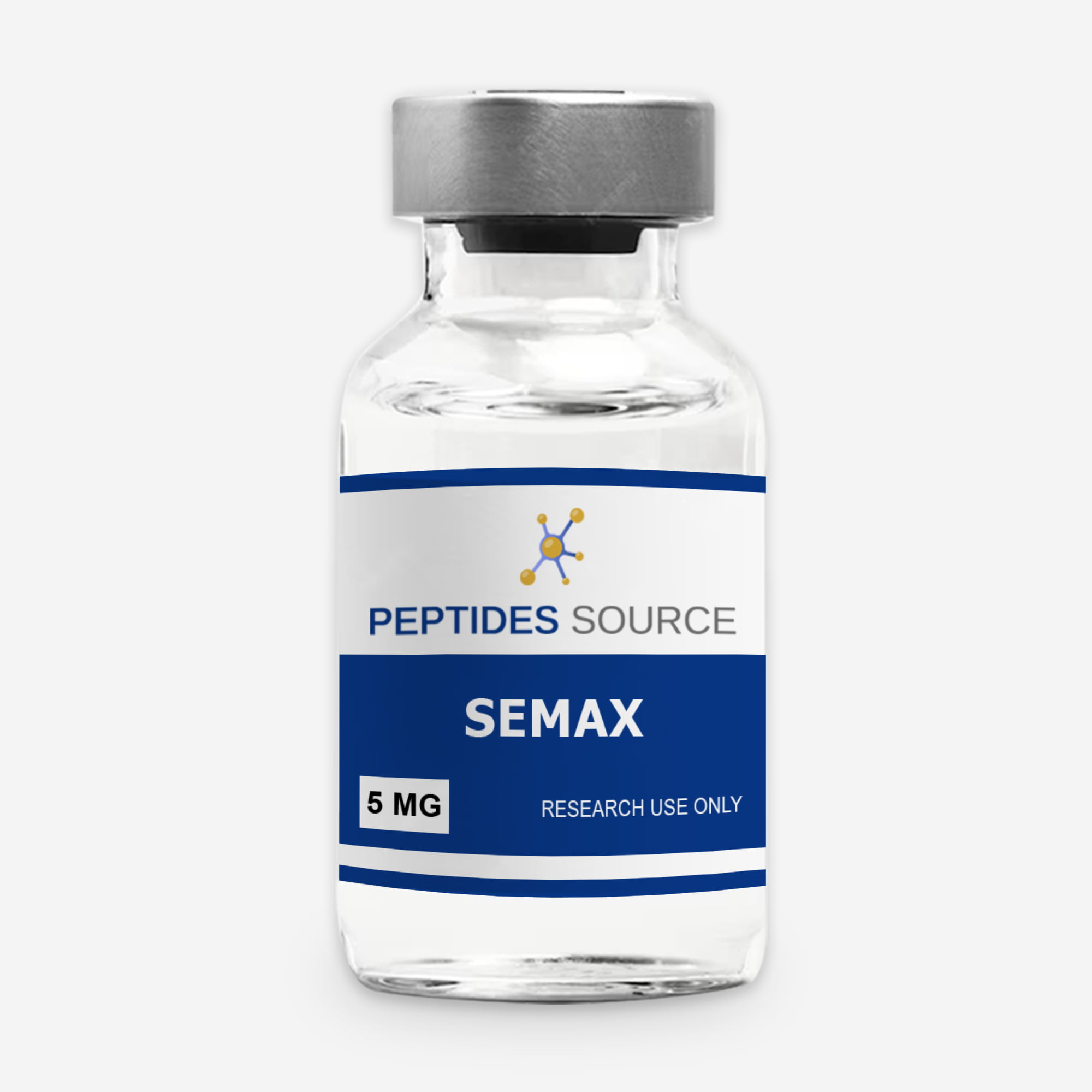
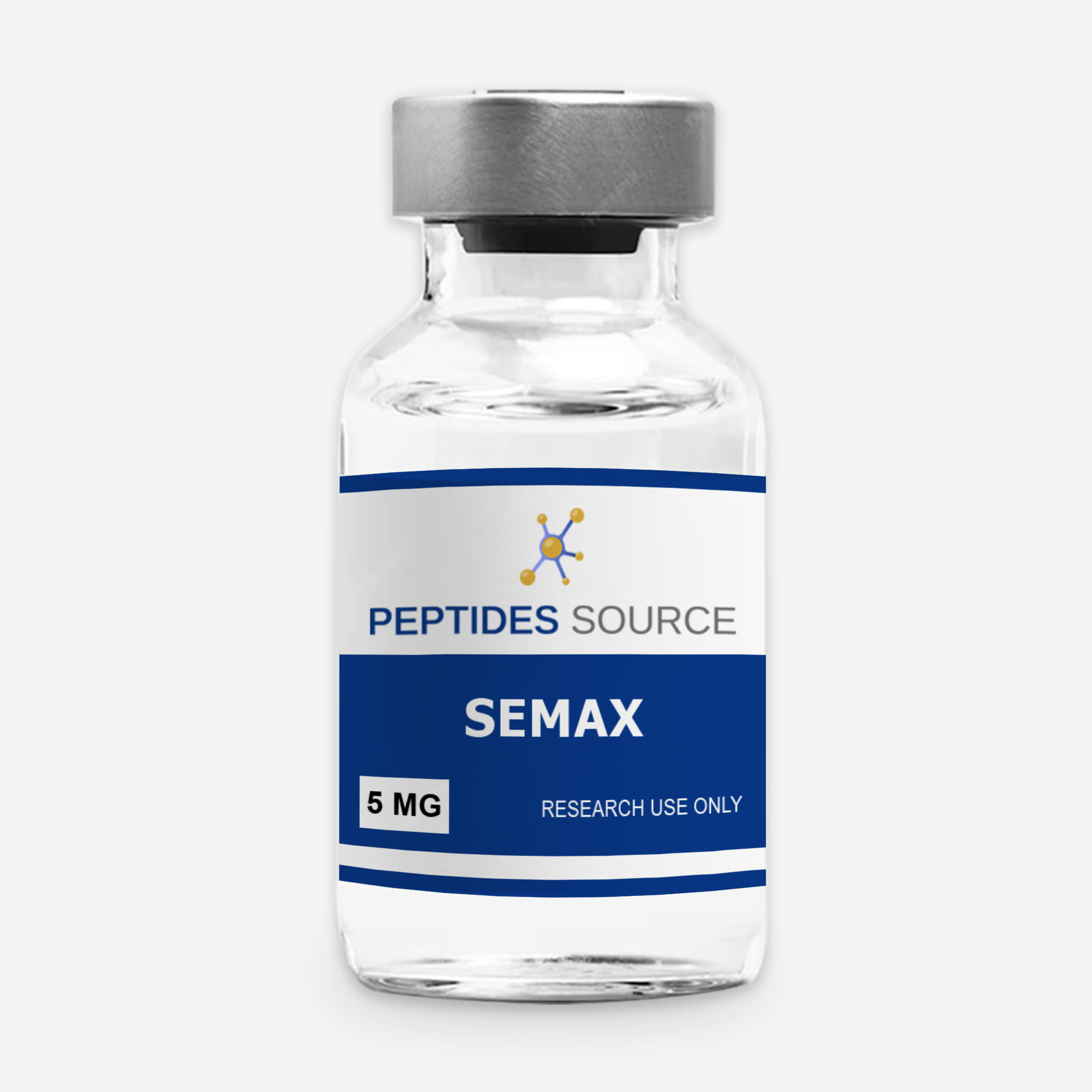
Semax (Met-Glu-His-Phe-Pro-Gly-Pro) is a synthetic heptapeptide analog of the adrenocorticotropic hormone fragment ACTH(4-10), originally developed at the Institute of Molecular Genetics of the Russian Academy of Sciences.
Designed to retain the neurotropic properties attributed to the ACTH(4-10) sequence while eliminating steroidogenic hormonal activity, Semax research has expanded significantly over the past three decades, establishing the compound as one of the most extensively studied research peptides in the CNS-targeted neuropeptide field.
The compound occupies a distinctive position in preclinical neuroscience research. Unlike many CNS-targeted peptides that interact with a single receptor system, Semax has been documented across multiple experimental paradigms – from neurotrophic factor regulation in healthy rodent brain tissue to genome-wide transcriptional analysis in cerebral ischemia models.
This breadth of investigation has generated a substantial body of literature, though significant questions regarding the compound’s precise receptor pharmacology and translational relevance remain unresolved.
This article provides a detailed, research-focused examination of the Semax preclinical literature, covering its molecular design rationale, documented interactions with neurotrophic signaling pathways, gene expression studies in ischemia models, and the methodological limitations that define the current state of Semax research.
Key Takeaways
- Semax is a synthetic ACTH(4-10) analog engineered to preserve neurotropic activity while eliminating adrenocortical hormonal effects through C-terminal Pro-Gly-Pro stabilization.
- Preclinical studies have documented that Semax administration is associated with altered expression of brain-derived neurotrophic factor (BDNF) and nerve growth factor (NGF) across multiple rodent brain regions.
- Genome-wide transcriptional analyses in rat cerebral ischemia models have identified Semax-associated changes in hundreds of genes spanning immune, vascular, and neurotransmitter pathways.
- The compound has been investigated for its interactions with dopaminergic and serotonergic systems in rodent models, though the complete receptor-level mechanism remains incompletely characterized.
- The majority of published Semax research originates from Russian institutions, and controlled human clinical trials conducted under Western regulatory standards are limited.
Molecular Design and Structural Rationale
The development of Semax was guided by a specific pharmacological objective: to isolate the cognitive-related activity associated with the ACTH(4-10) fragment from the broader hormonal effects of the full ACTH molecule. The ACTH(4-10) sequence (Met-Glu-His-Phe-Arg-Trp-Gly) had been identified in earlier research as the minimal fragment responsible for the behavioral effects observed in ACTH studies, independent of adrenocortical stimulation.
However, this native fragment was subject to rapid enzymatic degradation in vivo, limiting its utility in experimental settings.
To address this pharmacokinetic limitation, researchers replaced the C-terminal residues with a Pro-Gly-Pro tripeptide sequence, creating the final heptapeptide Met-Glu-His-Phe-Pro-Gly-Pro (Ashmarin et al., 1995). This modification served two purposes: it increased the peptide’s resistance to aminopeptidase degradation, extending its effective half-life in experimental preparations, and it eliminated the steroidogenic signaling associated with the full ACTH molecule.
The resulting compound retained the melanocortin-related receptor interactions attributed to the ACTH(4-10) core sequence while presenting an improved pharmacokinetic profile for laboratory investigation.
The Pro-Gly-Pro Contribution
The Pro-Gly-Pro tripeptide is itself a biologically active fragment – the N-terminal degradation product of collagen known to interact with immune-related signaling pathways. Some researchers have proposed that this C-terminal addition may contribute independently to Semax’s observed effects, a hypothesis that has been partially investigated through comparative studies using isolated Pro-Gly-Pro peptide fragments (Dmitrieva et al., 2010).
Neurotrophic Factor Regulation: BDNF and NGF Studies
The most consistently documented area of Semax research involves its relationship with neurotrophic factor expression, particularly brain-derived neurotrophic factor (BDNF) and nerve growth factor (NGF). These endogenous proteins play central roles in neuronal survival, differentiation, and synaptic plasticity, making them key targets in neuroscience research.
Dolotov et al. (2006) demonstrated that Semax binds specifically to rat basal forebrain tissue and that this binding was associated with increased BDNF protein levels in the same region (Dolotov et al., 2006a).
In a complementary study, the same research group reported that intranasal Semax administration in rats was associated with upregulated expression of both BDNF and its receptor trkB in the hippocampus, a brain region critically involved in learning and memory processes (Dolotov et al., 2006b).
Subsequent work expanded these observations across additional brain regions and time points. Inozemtseva et al. (2008) examined the temporal dynamics of NGF and BDNF gene expression following Semax administration and reported region-specific and time-dependent patterns of neurotrophin mRNA changes in the hippocampus, frontal cortex, and retina (Inozemtseva et al., 2008).
These findings suggested that Semax’s influence on neurotrophic factor expression is not a uniform, system-wide effect but rather a spatially and temporally modulated response that varies by brain region – a pattern consistent with the heterogeneous distribution of melanocortin receptors throughout the CNS.
Unresolved Mechanistic Pathways
The mechanistic pathway linking Semax binding to neurotrophic factor transcription has not been fully elucidated. Researchers have proposed that melanocortin receptor activation (particularly MC3 and MC4 subtypes) initiates intracellular signaling cascades that converge on BDNF and NGF gene promoter regions, but the complete signal transduction chain remains an active area of investigation.
This represents a significant gap in the Semax research literature, as establishing the receptor-to-transcription pathway would provide a more definitive mechanistic framework for interpreting the downstream observations.
Monoaminergic System Interactions
Beyond neurotrophic factor research, Semax has been investigated for its interactions with classical monoamine neurotransmitter systems. Eremin et al. (2005) reported that Semax administration in rodents was associated with altered turnover of both dopamine and serotonin in brain tissue homogenates, suggesting that the peptide interacts with – or indirectly modulates – monoaminergic signaling pathways (Eremin et al., 2005).
These observations are notable because they suggest a broader neurochemical profile than would be predicted from melanocortin receptor interactions alone. Whether Semax directly engages monoamine receptors or transporters, or whether the observed monoaminergic changes are secondary to upstream neurotrophic factor modulation, has not been conclusively determined.
This distinction is methodologically important: if Semax’s monoaminergic effects are downstream of BDNF upregulation, they would represent an indirect consequence rather than a primary pharmacological action.
Cerebral Ischemia Models and Transcriptomic Research
A substantial and more recent body of Semax research has focused on cerebral ischemia models, employing genome-wide transcriptomic approaches to characterize the peptide’s effects at the systems level. This line of investigation has produced some of the most detailed molecular data available for any neuropeptide research compound.
Dergunova et al. (2014) performed RNA-Seq analysis on rat brain tissue following transient middle cerebral artery occlusion (tMCAO) and reported that Semax administration was associated with differential expression of genes spanning immune response, vascular function, and neurotransmitter signaling pathways (Dergunova et al., 2014).
Specifically, the study documented suppression of proinflammatory gene transcripts and activation of genes associated with neurotransmission – a transcriptional pattern that diverged substantially from the ischemia-only control condition.
Subsequent transcriptomic and proteomic studies from the same research group expanded on these findings. Filippenkov et al. (2020) conducted a genome-wide analysis of Semax’s effects in a rat ischemia-reperfusion model and reported that the peptide was associated with compensation of mRNA expression patterns disrupted during the ischemic event (Filippenkov et al., 2020).
A follow-up proteomic analysis confirmed that several of the transcriptional changes observed at the mRNA level were reflected in altered protein expression profiles (Filippenkov et al., 2021).
Neuroimmune Dimensions
Medvedeva et al. (2017) further demonstrated that Semax modulated the expression of genes involved in immune cell chemotaxis and immunoglobulin production in ischemic brain tissue, suggesting that the peptide’s documented effects in ischemia models involve neuroimmune signaling in addition to direct neuronal pathways (Medvedeva et al., 2017).
These ischemia studies represent the most technically sophisticated body of Semax research to date, employing unbiased genome-wide approaches rather than candidate gene analyses. However, they share a common limitation: all were conducted in rat models using a single ischemia paradigm (MCAO variants), and the relevance of these transcriptomic signatures to other species or experimental conditions has not been established.
Copper Binding Properties
An additional line of Semax research has examined the compound’s metal-binding characteristics. Gaier et al. (2014) reported that Semax demonstrates high affinity for copper(II) ions and that this copper-binding capacity was associated with protective effects against metal-induced cellular toxicity in vitro (Gaier et al., 2014).
While this finding is peripheral to the primary neurotrophic and transcriptomic research areas, it has generated interest regarding potential interactions between Semax and copper-dependent enzymatic processes in neural tissue. The significance of this metal-binding property within the broader context of Semax’s documented neurochemical effects remains to be determined.
Research Limitations and Methodological Considerations
Several important limitations apply to the current body of Semax research that investigators should consider when designing experimental protocols.
First, the geographic concentration of the published literature represents a significant constraint. The majority of Semax studies have been conducted at a small number of Russian research institutions, primarily the Institute of Molecular Genetics and affiliated laboratories. While this reflects the compound’s development history, it raises questions about independent replication that are standard in evaluating any research compound.
Researchers working with related peptides such as Selank and DSIP face similar geographic concentration challenges in the published literature.
Second, the receptor pharmacology of Semax remains incompletely defined. Although the compound is classified as a melanocortin-related peptide based on its ACTH(4-10) core sequence, formal binding studies characterizing its affinity and selectivity across the five known melanocortin receptor subtypes (MC1R-MC5R) are limited.
Without this receptor-level characterization, attributing Semax’s downstream effects to specific receptor-mediated pathways involves a degree of inference that should be acknowledged.
Third, the blood-brain barrier permeability profile of Semax has not been comprehensively characterized across species. While behavioral and neurochemical changes have been documented following intranasal administration in rodent models – an administration route that may partially bypass the BBB through olfactory pathways – the extent to which intact Semax molecules reach central targets through systemic routes is not well established.
Fourth, dose-response relationships and pharmacokinetic parameters (half-life, volume of distribution, metabolite identification) have not been comprehensively published for Semax across experimental species. This gap complicates cross-study comparisons and makes it difficult to establish standardized experimental protocols.
Sourcing and Purity Standards
Finally, all Semax available through US research suppliers is designated for research use only. Researchers sourcing this compound should verify purity through independent Certificates of Analysis (COAs) and HPLC documentation, ideally confirming ≥98% purity.
USA-made peptides manufactured under GMP-compliant conditions provide the batch-to-batch consistency that reproducible research requires. Researchers interested in related compounds may also explore Epithalon and MOTS-c research offerings through established suppliers.
Where Semax Research Stands – and Where It’s Headed
Semax occupies a unique position among CNS-targeted research peptides. Its documented interactions with neurotrophic factor expression, monoaminergic neurotransmitter systems, and ischemia-related gene transcription programs represent a breadth of investigation that few synthetic peptides in this size class have received.
The genome-wide transcriptomic studies from the past decade, in particular, have moved beyond candidate-gene approaches to provide systems-level characterization of the compound’s molecular signatures in rodent brain tissue.
At the same time, the field remains constrained by its geographic concentration, incomplete receptor pharmacology, and the absence of controlled studies conducted under Western regulatory frameworks. For Semax research to advance, independent replication in non-Russian laboratory settings, formal receptor binding characterization across melanocortin subtypes, and comprehensive pharmacokinetic profiling represent critical next steps.
Until these gaps are addressed, the preclinical literature – while substantial – should be interpreted within the context of these acknowledged limitations.
Laboratories sourcing Semax and related neuropeptide research compounds should prioritize suppliers offering comprehensive purity documentation, batch-specific COAs, and transparent manufacturing standards. Detailed compound specifications are available through the Peptide Source research catalog.
FOR RESEARCH USE ONLY The content in this article is for educational and informational purposes only, based on published scientific literature. The compounds discussed are not FDA-approved for human or veterinary use and are strictly intended for in-vitro laboratory research by qualified professionals. Peptides Source does not endorse or support the use of these compounds outside of a controlled research environment. Nothing in this article constitutes medical advice.
Frequently Asked Questions
1. What is Semax, and how does it differ from naturally occurring ACTH?
Semax is a synthetic heptapeptide analog of the ACTH(4-10) fragment, designed to retain the neurotropic activity associated with this minimal active sequence while eliminating the adrenocortical hormonal effects of the full ACTH molecule.
The addition of a C-terminal Pro-Gly-Pro tripeptide increases metabolic stability compared to the native ACTH(4-10) fragment, which is rapidly degraded by aminopeptidases in vivo.
2. What neurotrophic factors has Semax been associated with in preclinical research?
The most extensively documented associations involve brain-derived neurotrophic factor (BDNF) and nerve growth factor (NGF). Multiple rodent studies have reported that Semax administration was associated with altered expression levels of these neurotrophins in specific brain regions, including the hippocampus, basal forebrain, frontal cortex, and retina.
The temporal and regional patterns of these changes vary across studies.
3. What has genome-wide transcriptomic research revealed about Semax in ischemia models?
RNA-Seq and proteomic analyses in rat cerebral ischemia models have documented that Semax administration was associated with differential expression of hundreds of genes spanning immune response, vascular function, neurotransmitter signaling, and neurotrophin pathways.
These studies represent the most technically sophisticated body of Semax research to date, though all were conducted in a single species using MCAO-based ischemia paradigms.
4. Is Semax approved for any clinical use?
Semax has been approved for clinical use in Russia under Russian regulatory standards. However, this approval occurred within a different regulatory framework than that of the United States, the European Union, or other Western jurisdictions, and it does not constitute evidence of efficacy or safety under FDA or EMA standards.
All Semax available through US research suppliers is designated for research use only.
5. What quality standards should researchers consider when sourcing Semax?
Researchers should verify compound purity through independent Certificates of Analysis (COAs) and HPLC documentation, ideally confirming ≥98% purity.
Given the peptide’s sensitivity to enzymatic degradation and the importance of structural integrity for reproducible experimental results, sourcing from USA-made, GMP-compliant manufacturers with documented batch-to-batch consistency is recommended.
References
- Ashmarin, I.P., Nezavibatko, V.N., Levitskaya, N.G., et al. (1995). Design and investigation of an ACTH(4-10) analogue lacking D-amino acids and possessing nootropic properties. Neuroscience Research Communications, 16(2), 105–112. https://pubmed.ncbi.nlm.nih.gov/7770105
- Dolotov, O.V., Karpenko, E.A., Inozemtseva, L.S., et al. (2006a). Semax, an analogue of adrenocorticotropin (4-10), binds specifically and increases levels of brain-derived neurotrophic factor protein in rat basal forebrain. Journal of Neurochemistry, 97(Suppl 1), 82–86. https://pubmed.ncbi.nlm.nih.gov/16635254
- Dolotov, O.V., Karpenko, E.A., Inozemtseva, L.S., et al. (2006b). Semax, an analog of ACTH(4-10) with cognitive effects, regulates BDNF and trkB expression in the rat hippocampus. Brain Research, 1117(1), 54–60. https://pubmed.ncbi.nlm.nih.gov/1699603
- Inozemtseva, L.S., Karpenko, E.A., Dolotov, O.V., et al. (2008). Comparison of the temporary dynamics of NGF and BDNF gene expression in rat hippocampus, frontal cortex, and retina under Semax action. Doklady Biological Sciences, 422, 330–332. https://pubmed.ncbi.nlm.nih.gov/19662538
- Eremin, K.O., Kudrin, V.S., Saransaari, P., et al. (2005). Semax, an ACTH(4-10) analogue with nootropic properties, activates dopaminergic and serotoninergic brain systems in rodents. Neurochemical Research, 30(12), 1493–1500. https://pubmed.ncbi.nlm.nih.gov/16362768/
- Dmitrieva, V.G., Povarova, O.V., Skvortsova, V.I., et al. (2010). Semax and Pro-Gly-Pro activate the transcription of neurotrophins and their receptor genes after cerebral ischemia. Cellular and Molecular Neurobiology, 30(1), 71–79. https://pubmed.ncbi.nlm.nih.gov/19633950/
- Dergunova, L.V., Filippenkov, I.B., Stavchansky, V.V., et al. (2014). The peptide semax affects the expression of genes related to the immune and vascular systems in rat brain focal ischemia: genome-wide transcriptional analysis. BMC Genomics, 15, 228. https://pubmed.ncbi.nlm.nih.gov/24661604/
- Filippenkov, I.B., Stavchansky, V.V., Denisova, A.E., et al. (2020). Novel insights into the protective properties of ACTH(4-7)PGP (Semax) peptide at the transcriptome level following cerebral ischaemia-reperfusion in rats. Genes, 11(6), 681. https://pubmed.ncbi.nlm.nih.gov/32580520/
- Filippenkov, I.B., Remizova, J.A., Denisova, A.E., et al. (2021). Brain protein expression profile confirms the protective effect of the ACTH(4-7)PGP peptide (Semax) in a rat model of cerebral ischemia-reperfusion. International Journal of Molecular Sciences, 22(12), 6179. https://pubmed.ncbi.nlm.nih.gov/34201112/
- Medvedeva, E.V., Dmitrieva, V.G., Povarova, O.V., et al. (2017). Semax, an analog of ACTH(4-7), regulates expression of immune response genes during ischemic brain injury in rats. Molecular Genetics and Genomics, 292(3), 635–653. https://pubmed.ncbi.nlm.nih.gov/28255762
- Gaier, E.D., Kleppinger, A., Ralle, M., et al. (2014). Semax, an ACTH4-10 peptide analog with high affinity for copper(II) ion and protective ability against metal induced cell toxicity. Journal of Inorganic Biochemistry, 141, 106–112. https://pubmed.ncbi.nlm.nih.gov/25310602/