


DISCLAIMER
FOR RESEARCH USE ONLY The content in this article is for educational and informational purposes only, based on published scientific literature. The compounds discussed are not FDA-approved for human or veterinary use and are strictly intended for in-vitro laboratory research by qualified professionals. Peptides Source does not endorse or support the use of these compounds outside of a controlled research environment. Nothing in this article constitutes medical advice.
Among the research peptides most actively investigated in the tissue repair and regenerative biology space, TB-500 occupies a distinctive position – one defined as much by its molecular origins as by the breadth of its preclinical investigation. A synthetic fragment derived from the actin-binding domain of the naturally occurring protein Thymosin Beta-4 (Tβ4), TB-500 has been studied across a wide range of in-vitro and in-vivo preclinical models examining cellular migration, angiogenesis, inflammatory pathway modulation, and connective tissue remodeling.
The biological significance of Thymosin Beta-4 has been recognized since its initial isolation from thymic tissue in the 1960s. As one of the most abundant intracellular peptides in mammalian cells – expressed ubiquitously across tissue types with particularly high concentrations in platelets, macrophages, and cells at sites of injury – Tβ4 has been characterized as a multifunctional signaling molecule with a central role in the cellular response to tissue damage. TB-500, the synthetic research form, reproduces the primary actin-binding motif of this larger protein, providing researchers with a targeted tool for investigating the specific mechanisms associated with this domain in controlled laboratory settings.
This article provides a comprehensive research overview of TB-500 – covering its molecular profile and its relationship to the parent Thymosin Beta-4 protein, the primary signaling pathways under investigation, key findings from the preclinical literature, and considerations for laboratory sourcing and handling. All content is presented strictly within an educational and research context. TB-500 is not approved for therapeutic or clinical application, and all studies referenced involve preclinical or in-vitro models unless explicitly stated otherwise.
Key Takeaways
- TB-500 is a synthetic heptapeptide fragment corresponding to the actin-binding motif (LKKTETQ sequence) within Thymosin Beta-4 – it is a distinct molecule from the full 43-amino acid Thymosin Beta-4 protein, a distinction important for accurate interpretation of the research literature.
- The primary mechanism through which TB-500 is studied involves G-actin sequestration – the regulation of monomeric actin availability – which influences cell migration, cytoskeletal organization, and the recruitment of repair-committed cell populations to injury sites in preclinical models.
- TB-500 research has identified angiogenesis promotion, NF-κB-mediated inflammatory pathway modulation, and anti-fibrotic activity as additional mechanisms of interest, making it a multi-pathway research tool in tissue repair science.
- The parent molecule Thymosin Beta-4 has progressed through limited Phase I and Phase II clinical trials for specific wound healing applications – but these human findings are not directly transferable to TB-500, which remains in the preclinical research domain without dedicated clinical trial data of its own.
- TB-500 is frequently studied in combination with BPC-157 in multi-compound preclinical tissue repair protocols, with the mechanistic complementarity of the two peptides providing the scientific rationale for combined research designs.
Molecular Profile: TB-500 and Its Relationship to Thymosin Beta-4
Thymosin Beta-4: The Parent Protein
Thymosin Beta-4 (Tβ4) is a 43-amino acid endogenous peptide encoded by the TMSB4X gene. With a molecular formula of C₂₁₂H₃₅₀N₅₆O₇₈S and a molecular weight of approximately 4,963 Da, it is one of the most abundant intracellular peptides found in mammalian cells – conserved across species in a manner that reflects its fundamental biological role. Its primary characterized function is as an actin-sequestering protein: it binds G-actin (globular, monomeric actin) and regulates the equilibrium between monomeric and filamentous actin states within the cell, a dynamic with downstream consequences for cell morphology, motility, and division.
Thymosin Beta-4 expression is understood to increase significantly in response to tissue injury signals, with the peptide playing a recognized role in the initiation and coordination of the cellular repair response. The full protein contains multiple functional domains beyond the actin-binding motif, including regions associated with nuclear localization and additional protein-protein interaction sites – properties that distinguish it from its synthetic fragment, TB-500, in important ways for research interpretation.
TB-500: The Synthetic Actin-Binding Fragment
TB-500 is a synthetic heptapeptide – a chain of seven amino acids – with the sequence LKKTETQ. It corresponds specifically to the actin-binding domain of the Thymosin Beta-4 protein, with a molecular formula of C₃₈H₆₈N₁₀O₁₄ and a molecular weight of approximately 889 Da. This is substantially smaller than the full Thymosin Beta-4 protein, and the distinction matters for research interpretation: TB-500 reproduces the primary actin-binding motif of Tβ4 but does not contain the additional functional domains present in the full-length protein. Experimental findings for one cannot always be directly extrapolated to the other.
TB-500 is produced via solid-phase peptide synthesis (SPPS), the standard method for research-grade peptide production. Supplied in lyophilized powder form, it is reconstituted for laboratory use with a suitable research diluent or a suitable research diluent depending on the specific research protocol. Long-term storage at -20°C in lyophilized form is standard, with reconstituted solutions stored at 4°C and used within supplier-specified timeframes.
Why TB-500 Is Used as a Research Tool
The preference for the TB-500 fragment over full-length Thymosin Beta-4 in many research contexts relates to its synthetic reproducibility, molecular simplicity, and the ability to isolate the actin-binding mechanism from the broader functional profile of the parent protein. By working with the specific LKKTETQ sequence, researchers can investigate actin-binding-associated biological outcomes with greater mechanistic specificity than would be achievable with the full 43-amino acid protein.
Primary Research Mechanisms
Actin Sequestration and Cytoskeletal Dynamics
The defining mechanism through which TB-500 is studied is its interaction with G-actin. Actin exists in two primary forms within the cell: G-actin (globular, monomeric) and F-actin (filamentous, polymerized). The dynamic equilibrium between these two forms – regulated in part by actin-binding proteins including Thymosin Beta-4 – is fundamental to cell shape, motility, and division.
By sequestering G-actin, TB-500 maintains a pool of monomeric actin available for rapid polymerization when cells need to migrate or change shape in response to environmental signals. This regulatory function has direct relevance to tissue repair, where the migration of fibroblasts, endothelial cells, keratinocytes, and progenitor cells into injury sites is a prerequisite for effective repair. A comprehensive review in Frontiers in Endocrinology has characterized Thymosin Beta-4’s actin-sequestering properties and their downstream effects on cellular migration and wound healing responses in experimental models.
Cell Migration and Wound Healing Research
The connection between TB-500’s actin-sequestering activity and cell migration has made cell motility studies a primary domain of its research investigation. A foundational 1999 study by Malinda and colleagues demonstrated that Thymosin Beta-4 stimulated directional migration of human umbilical vein endothelial cells in vitro – establishing an early experimental basis for the peptide’s angiogenic research interest and informing subsequent TB-500 studies examining migration in related cell types.
Subsequent research has examined TB-500 in models involving fibroblast migration, keratinocyte movement across wound surfaces, and the recruitment of endothelial progenitor cells in vascular remodeling contexts. Upregulation of matrix metalloproteinase (MMP) production has also been documented in experimental settings, a finding consistent with TB-500’s proposed facilitation of basement membrane degradation necessary for cell movement through tissue matrices.
Angiogenesis Research
Beyond cell migration, TB-500 has been investigated in the context of angiogenesis – the formation of new blood vessels from existing vasculature. Endothelial cell proliferation, migration, and tube formation are the in-vitro endpoints most commonly examined in this research domain, with Thymosin Beta-4 and TB-500 studied for their capacity to promote these processes in cell culture models.
The angiogenic research interest in TB-500 is mechanistically connected to its cell migration effects – endothelial cell motility is a prerequisite for vascular sprouting, and TB-500’s actin-sequestering activity is understood to facilitate this movement. In vivo animal models have extended this investigation to examine vascular density endpoints in wound healing contexts, with preclinical findings informing the broader research interest in TB-500 as a tool for studying the vascularization component of tissue repair.
NF-κB Pathway Modulation and Anti-Inflammatory Research
TB-500 research has also examined inflammatory pathway modulation, with particular focus on NF-κB (nuclear factor kappa-light-chain-enhancer of activated B cells) signaling. NF-κB is a transcription factor central to the regulation of pro-inflammatory cytokine expression – its activation is a defining feature of the inflammatory phase of tissue repair, and its appropriate resolution is associated with the transition toward the proliferative phase.
Studies have investigated Thymosin Beta-4 and TB-500 for their capacity to downregulate NF-κB signaling in experimental inflammatory models, with concurrent reduction in pro-inflammatory cytokines including TNF-α and IL-6 observed in preclinical animal preparations. This anti-inflammatory mechanism is studied as complementary to TB-500’s pro-migratory activity – the combined capacity to attenuate excessive inflammation while simultaneously promoting repair cell recruitment makes it a mechanistically interesting research tool for studying the inflammatory-to-proliferative transition in wound healing models.
Anti-Fibrotic Research
A further dimension of TB-500 research concerns its proposed anti-fibrotic activity – specifically the capacity to modulate the extent of fibrosis in tissue repair models. Excessive fibrotic response – characterized by disorganized collagen deposition and myofibroblast persistence – is associated with scar formation and impaired tissue function in many repair contexts. Preclinical studies have investigated whether TB-500 activity influences the balance between functional tissue repair and fibrotic outcomes, with findings in several animal models suggesting a role in reducing excessive collagen cross-linking and myofibroblast activity at injury sites.
This anti-fibrotic profile has contributed to the scientific interest in studying TB-500 in combination with BPC-157, where the organized collagen deposition associated with BPC-157 research and the anti-fibrotic activity associated with TB-500 are proposed as complementary influences on connective tissue repair quality in preclinical models.
Research Domains: Where TB-500 Has Been Investigated
Musculoskeletal Research Models
Musculoskeletal tissue – tendons, ligaments, muscle, and bone – represents the most extensively documented area of TB-500 preclinical investigation. Studies conducted in rodent models have examined the compound in surgical injury preparations including tendon transection, ligament injury, muscle crush, and bone defect models. Preclinical outcomes measured in these studies have included tensile strength of repaired tissue, histological grading of collagen alignment and organization, and functional recovery endpoint assessment.
The mechanical properties of repaired connective tissue – particularly tensile strength restoration and collagen architecture – have been the most commonly reported outcomes in the musculoskeletal TB-500 literature, reflecting the clinical relevance of these endpoints for the broader field of tissue repair research.
Cardiovascular Research
TB-500 and its parent peptide Thymosin Beta-4 have also been investigated in cardiovascular research contexts. A distinct research angle involves the Ac-SDKP tetrapeptide – a naturally occurring cleavage product of Thymosin Beta-4 generated by the enzyme prolyl oligopeptidase – which has been investigated in its own right for cardiovascular effects including anti-fibrotic activity in cardiac tissue models and modulation of the renin-angiotensin-aldosterone system in experimental preparations.
More directly, Thymosin Beta-4 has been studied in preclinical cardiac ischemia models, with research examining whether its cell migration and anti-inflammatory properties influence outcomes in myocardial injury preparations. A limited pilot human study (Zhu et al., 2016) examined autologous Thymosin Beta-4-pretreated endothelial progenitor cell transplantation in patients with acute myocardial infarction – a research design that reflects translational interest in the molecule’s cardiovascular biology, though the study’s scope and design are insufficient to characterize clinical outcomes.
Neurological Research Models
A smaller body of literature has examined Thymosin Beta-4 and TB-500 in neurological research contexts, including models of central nervous system injury, peripheral nerve damage, and neuroprotective endpoint assessment. The peptide’s cell migration-promoting activity is of interest in neurological repair contexts where axonal regeneration and Schwann cell migration are relevant experimental endpoints. Autophagy-associated signaling in experimental neurological cell models has also been examined as a potential mechanism connecting TB-500 activity to neuroprotective outcomes in in-vitro systems.
Dermal and Wound Healing Research
Given Thymosin Beta-4’s role in the cellular mechanics of wound healing, dermal wound models represent a well-established domain of TB-500 research investigation. Studies examining keratinocyte migration, epithelial reepithelialization, extracellular matrix remodeling, and vascular density endpoints in wound healing preparations have characterized both topical and systemic administration routes in animal models, with the FASEB Journal literature documenting reepithelialization rate improvements in Thymosin Beta-4-treated wound healing models.
Preclinical vs. Clinical Evidence: An Important Distinction
The Full Thymosin Beta-4 Clinical Record
Unlike its synthetic fragment TB-500, full-length Thymosin Beta-4 has progressed through limited human clinical research. Phase I and Phase II trials have been conducted for specific wound healing applications – including non-healing dermal wounds and corneal injuries – providing preliminary human pharmacology data for the parent protein. These trials have generally supported the wound healing and cell migration mechanism characterized in preclinical models, offering a degree of clinical reference for the biological rationale underlying TB-500’s research interest.
The TB-500 Specific Gap
However, this clinical data pertains to the full 43-amino acid Thymosin Beta-4 protein – not to TB-500, the synthetic heptapeptide fragment. The positive signals from Thymosin Beta-4 clinical programs are not directly transferable to TB-500, which is a structurally distinct, shorter molecule without its own dedicated peer-reviewed clinical trial record. Researchers should maintain this distinction when contextualizing preclinical TB-500 findings against the broader Thymosin Beta-4 literature.
Implications for Research Design
The essentially preclinical evidence base for TB-500 specifically – combined with the limited but positive clinical signals for the parent protein – positions this compound at an interesting and active frontier of translational research. Investigators designing TB-500 studies should consult the primary literature for model-specific guidance on experimental concentrations, administration route selection, endpoint measurement, and appropriate control group design. Institutional review and ethics committee approval are essential prior to initiating any in-vivo research involving these compounds.
Handling, Storage, and Quality Considerations
Storage and Reconstitution
TB-500 is supplied in lyophilized powder form for research use, offering greater stability than reconstituted solutions. Key handling considerations for laboratory use include:
Storage temperature: Lyophilized TB-500 should be stored at -20°C for long-term preservation. Repeated freeze-thaw cycles should be avoided through single-use aliquoting of stock solutions prior to initial reconstitution.
Reconstitution: a suitable research diluent is the standard reconstitution solvent for TB-500 in research settings. a suitable research diluent may be used depending on the protocol. Reconstituted solutions should be stored at 4°C and used within the timeframe specified in the supplier’s documentation.
Light exposure: TB-500 should be protected from prolonged direct light exposure to prevent structural degradation.
Sourcing and Purity
For research integrity, TB-500 should be sourced from a supplier providing batch-specific Certificates of Analysis (COAs) with HPLC purity data and mass spectrometry identity confirmation. Given the molecular distinction between TB-500 (LKKTETQ, ~889 Da) and full Thymosin Beta-4 (~4,963 Da), mass spectrometry confirmation is particularly important for verifying that the compound supplied matches the intended synthetic fragment specification.
Research-grade TB-500 should meet a minimum purity threshold of 98%. Impurities in a peptide of this length and structural simplicity can significantly influence actin-binding assay outcomes, cell migration endpoint measurements, and other biologically sensitive experimental readouts.
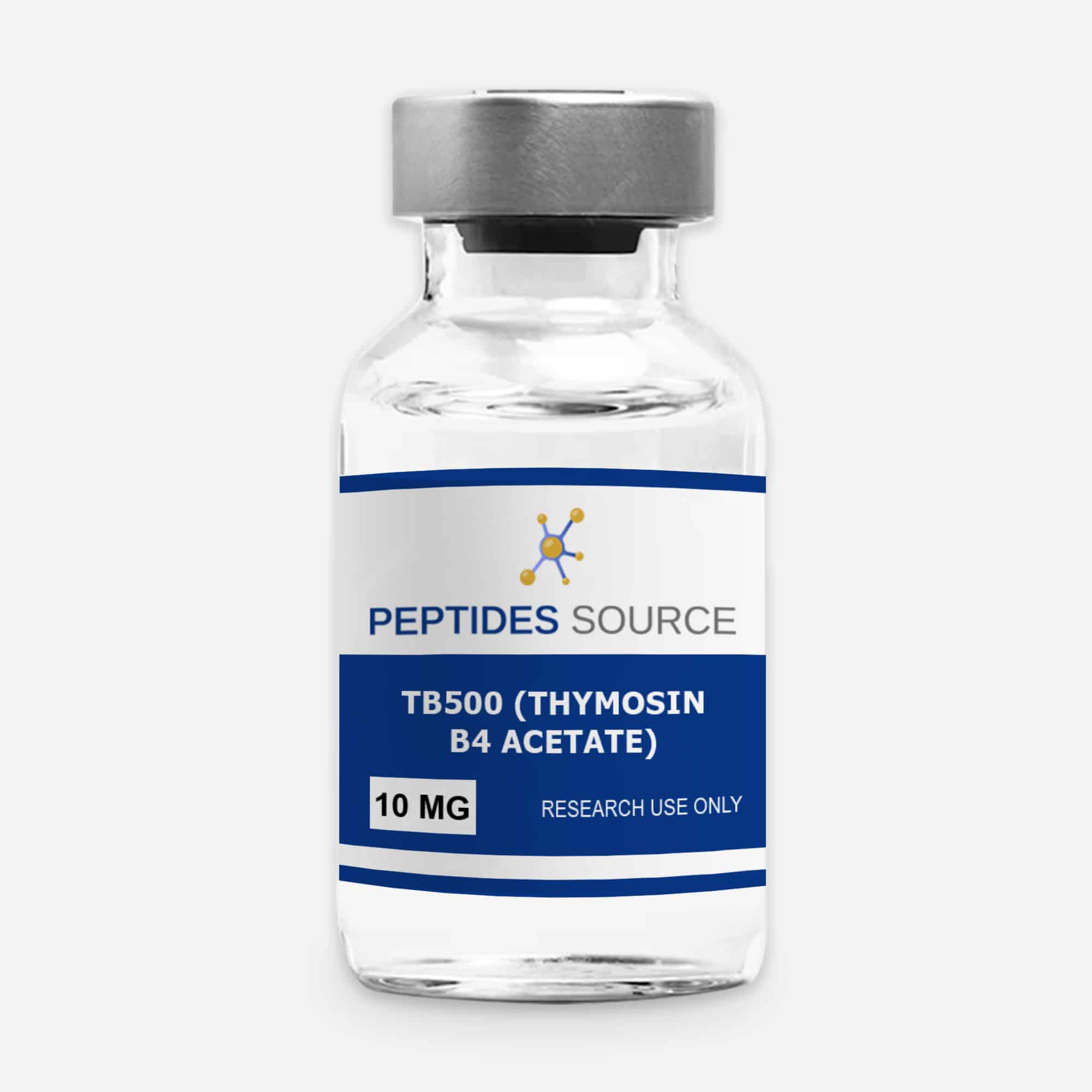
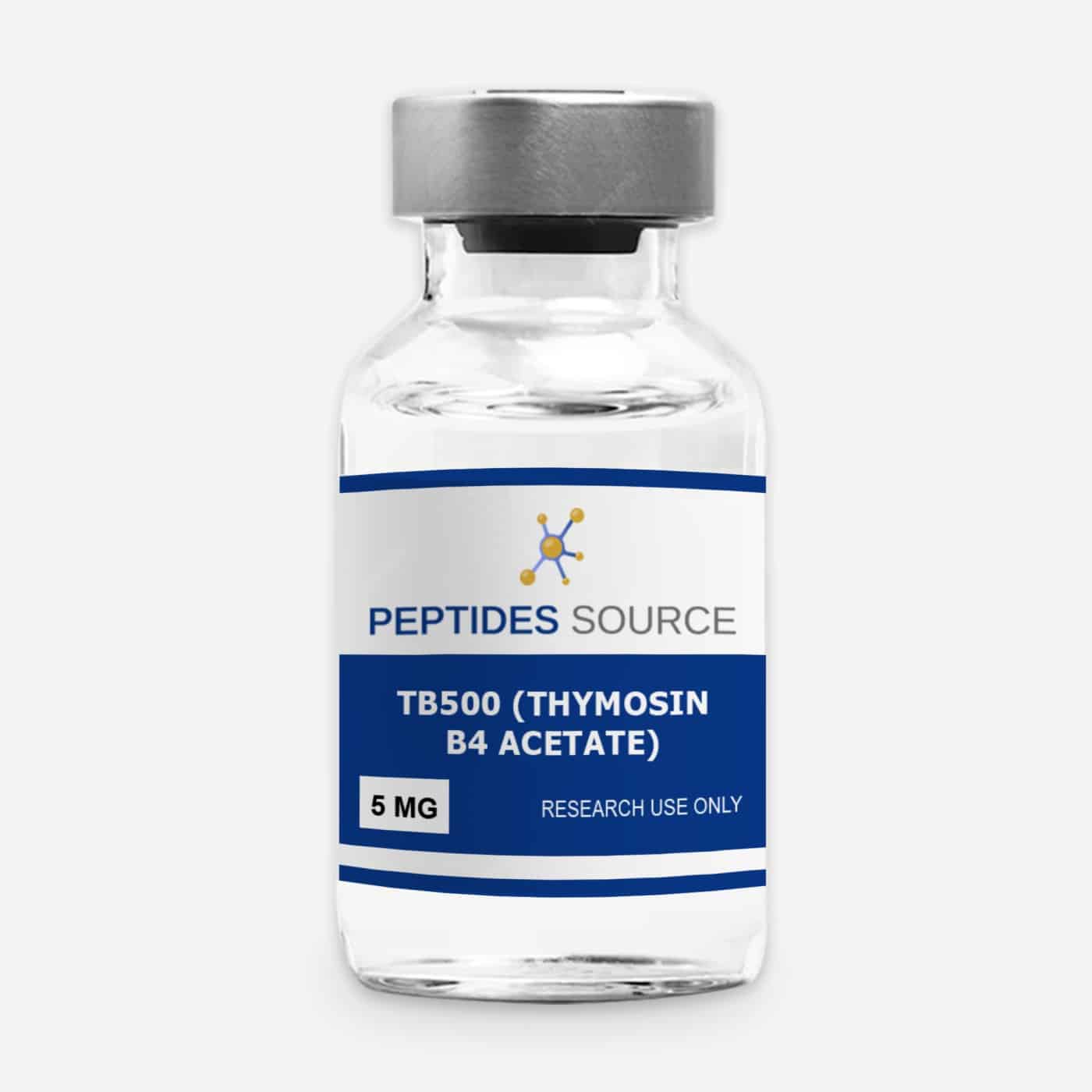
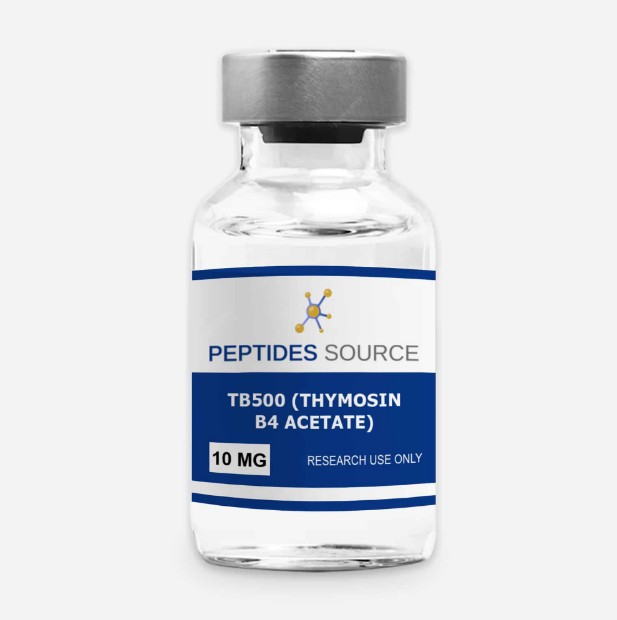
Peptides Source supplies TB-500 (Thymosin B4 Acetate) in 5mg and 10mg vial formats, and as a component of the BPC-157/TB-500 blends – manufactured through GMP-certified, WHO/ISO 9001:2008 approved facilities with 99% purity standards and third-party batch testing documentation.
TB-500 Research: Mechanism, Evidence, and Laboratory Applications
TB-500 represents one of the most mechanistically well-characterized tissue repair research peptides in the current preclinical literature. Its actin-sequestering mechanism – and the downstream consequences for cell migration, angiogenesis, and inflammatory pathway regulation – provides a scientifically coherent framework that has sustained research interest across multiple tissue types, model systems, and experimental endpoints over decades of investigation.
The important boundaries of this evidence base – the distinction between TB-500 and the parent Thymosin Beta-4 protein, the absence of dedicated TB-500 clinical trial data, and the primarily preclinical nature of the existing literature – define both the current state of the science and its most compelling open research questions. For laboratory researchers investigating tissue repair biology, cellular migration mechanisms, or angiogenic pathway modulation, TB-500 provides a well-referenced, mechanistically defined research tool with an established preclinical literature base.
Researchers interested in the tissue repair peptide research landscape more broadly, including the mechanistic relationship between TB-500 and BPC-157, and the scientific rationale for multi-compound research protocols, should look into the Tissue Repair Research Peptides category and the dedicated BPC-157 Research Overview in the Peptides Source research blog.
DISCLAIMER – FOR RESEARCH USE ONLY The content in this article is for educational and informational purposes only, based on published scientific literature. The compounds discussed are not FDA-approved for human or veterinary use and are strictly intended for in-vitro laboratory research by qualified professionals. Peptides Source does not endorse or support the use of these compounds outside of a controlled research environment. Nothing in this article constitutes medical advice.
References
- Malinda KM, Goldstein AL, Kleinman HK. Thymosin Beta-4 Stimulates Directional Migration of Human Umbilical Vein Endothelial Cells. Journal of Investigative Dermatology. 1999;113(3):364–368.
- Belsky JB, Rivers EP, Filbin MR, Lee PJ, Morris DC. Thymosin Beta-4 Regulation of Actin in Sepsis. Expert Opinion on Biological Therapy. 2018;18(SUP1):193.
- Kassem KM, Vaid S, Peng H, Sarkar S, Rhaleb NE. Tβ4–Ac-SDKP Pathway: Any relevance for the cardiovascular system? Canadian Journal of Physiology and Pharmacology. 2019;97(7):589–599.
- Han HJ, Kim S, Kwon J. Thymosin beta 4-Induced Autophagy Increases Cholinergic Signaling in PrP (106-126)-Treated HT22 Cells. Neurotox Res. 2019 Jul;36(1):58-65.
- Zhu J, Song J, Yu L, et al. Safety and Efficacy of Autologous Thymosin Beta-4 Pre-Treated Endothelial Progenitor Cell Transplantation in Patients with Acute ST-Segment Elevation Myocardial Infarction: A Pilot Study. Cytotherapy. 2016;18(8):1037–1042.
- Ho EN, Kwok W, Lau M, et al. Doping Control Analysis of TB-500, a Synthetic Version of an Active Region of Thymosin Beta-4, in Equine Urine and Plasma by Liquid Chromatography–Mass Spectrometry. Journal of Chromatography A. 2012;1265:57–69.