

DISCLAIMER
FOR RESEARCH USE ONLY The content in this article is for educational and informational purposes only, based on published scientific literature. The compounds discussed are not FDA-approved for human or veterinary use and are strictly intended for in-vitro laboratory research by qualified professionals. Peptides Source does not endorse or support the use of these compounds outside of a controlled research environment. Nothing in this article constitutes medical advice.
The hypothalamic-pituitary growth hormone axis is one of the most extensively studied endocrine systems in biomedical science. Governing a complex cascade of hormonal signals that influence protein synthesis, lipid metabolism, body composition, bone metabolism, and cellular repair processes, the GH axis represents a research system of broad scientific relevance – and a particularly active area of investigation for researchers working with synthetic peptide tools.
Two primary classes of research peptides are studied in the GH axis context. The first – growth hormone-releasing hormone (GHRH) analogs – are synthetic compounds that mimic the endogenous hypothalamic peptide responsible for stimulating pituitary somatotrophs to produce and release growth hormone. The second – growth hormone secretagogues (GHS), also known as growth hormone-releasing peptides (GHRPs) – are compounds that act through an entirely distinct receptor pathway to stimulate GH release, independently of the GHRH receptor system.
The complementary mechanisms of these two compound classes have made their combined study a particularly active area of preclinical research, with investigators examining whether simultaneous activation of both receptor pathways produces GH release profiles distinct from either compound studied in isolation. This article provides a category-level overview of the GH axis research peptide landscape – covering the underlying biology of the GH axis, the principal compounds under investigation, key findings from the preclinical and early clinical literature, and sourcing considerations for laboratory use.
All content is presented strictly within an educational and research context. No compound discussed here is approved for human therapeutic use beyond the specific, narrow indications noted where applicable, and all preclinical findings should be understood as research data not translatable to clinical outcomes without appropriate clinical validation.
Key Takeaways
- The GH axis is regulated by two primary receptor systems – the GHRH receptor (activated by GHRH analogs such as Tesamorelin, Sermorelin, and CJC-1295) and the growth hormone secretagogue receptor GHS-R1a (activated by GHRPs such as Ipamorelin, GHRP-2, GHRP-6, and Hexarelin) – with each pathway offering distinct research applications.
- Ipamorelin is distinguished from earlier GH secretagogues by its receptor selectivity documented in a landmark 1998 study by Raun and colleagues – producing GH release with minimal concurrent elevation of cortisol, prolactin, or ACTH, making it a cleaner research tool for GH-specific mechanistic studies.
- Tesamorelin is the only currently FDA-approved GHRH analog, indicated for a specific condition in HIV-associated lipodystrophy – its established clinical history provides research context without implying equivalence to other research-only GHRH analogs.
- The scientific rationale for combining GHRH analogs with GH secretagogues in preclinical research rests on the complementary and potentially synergistic activation of two distinct receptor pathways involved in endogenous GH pulse regulation.
- All GH axis research peptides discussed in this article are for research use only and are not approved for general human therapeutic application – the existing evidence base, while substantial, remains primarily preclinical for most compounds in this category.
The Hypothalamic-Pituitary GH Axis: The Biology Under Investigation
How Endogenous GH Secretion Is Regulated
Understanding the biological system that GH axis research peptides are designed to investigate is foundational to interpreting the preclinical literature. Growth hormone is produced by somatotroph cells in the anterior pituitary gland and secreted in a characteristic pulsatile pattern – in healthy adults, approximately six to twelve discrete GH pulses occur over a 24-hour period, with the largest pulse typically occurring in the early hours of sleep.
This pulsatility is governed primarily by two opposing hypothalamic signals. Growth hormone-releasing hormone (GHRH) – a 44-amino acid neuropeptide produced in the arcuate nucleus of the hypothalamus – travels to the anterior pituitary via the hypothalamic-pituitary portal system and binds GHRH receptors on somatotrophs, triggering GH synthesis and secretion through a cAMP-mediated signaling cascade. Somatostatin, produced in the periventricular nucleus, exerts the opposing effect – inhibiting GH release without affecting synthesis, creating the off-phase of each GH pulse.
The Role of the Ghrelin Receptor Pathway
A second regulatory pathway operates through the growth hormone secretagogue receptor (GHS-R1a), the endogenous ligand for which is ghrelin – a peptide produced primarily in the stomach. Activation of GHS-R1a stimulates GH release through a phospholipase C and intracellular calcium signaling mechanism distinct from the cAMP pathway of the GHRH receptor system. Importantly, GHS-R1a activation also exerts a suppressive effect on somatostatin release, effectively reducing the inhibitory brake on GH secretion simultaneously with stimulating its release.
Why Researchers Study These Pathways with Synthetic Peptides
The dual-receptor architecture of GH axis regulation – with two distinct, independently addressable pathways – makes synthetic peptide tools particularly valuable for mechanistic research. GHRH analogs allow investigators to selectively stimulate the GHRH receptor pathway, while GH secretagogues allow selective stimulation of GHS-R1a. By studying each pathway in isolation or in combination, researchers can examine questions about GH pulse regulation, downstream IGF-1 signaling, metabolic pathway modulation, and tissue-level GH effects with a precision not achievable through exogenous recombinant GH administration, which bypasses the endogenous axis entirely.
GHRH Analogs: Compounds Studied in This Class
What GHRH Analogs Are and How They Are Studied
GHRH analogs are synthetic peptides that reproduce or modify the sequence of endogenous GHRH to bind and activate the GHRH receptor on anterior pituitary somatotrophs. The primary research interest in GHRH analogs lies in their ability to stimulate endogenous GH production while preserving the physiological feedback architecture of the axis – including IGF-1 negative feedback and somatostatin-mediated pulse regulation – in contrast to direct exogenous GH administration.
Tesamorelin
Tesamorelin is a 44-amino acid GHRH analog with a trans-3-hexenoic acid modification at the N-terminus, conferring substantially greater resistance to proteolytic degradation compared to native GHRH or shorter analogs. It is the only FDA-approved GHRH analog currently in clinical use, indicated specifically for the reduction of excess abdominal fat in HIV-infected adults with lipodystrophy – a narrow clinical indication that provides an established pharmacokinetic and safety reference point for researchers working with this class of compound.
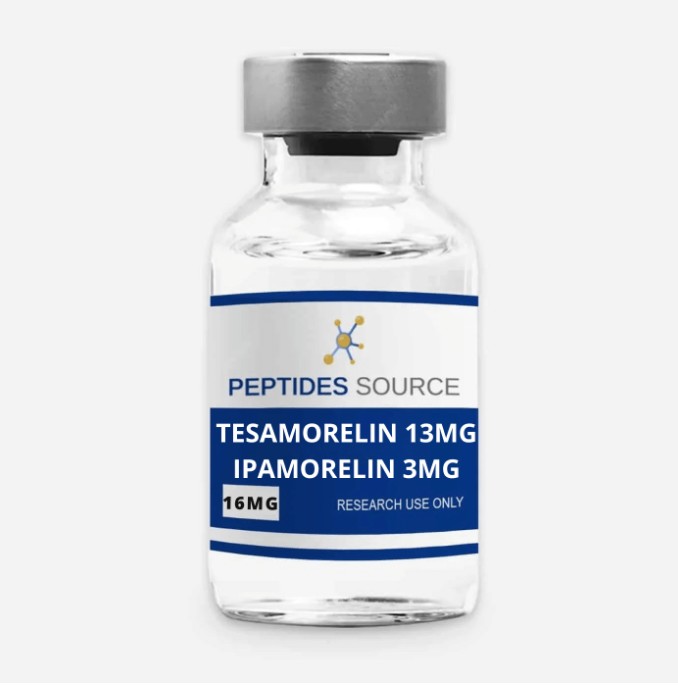
Preclinical and clinical research on Tesamorelin has examined GH pulsatility parameters, IGF-1 response profiles, visceral adipose tissue modeling, and metabolic marker changes in relevant experimental populations. The compound’s established clinical history makes it one of the most pharmacologically well-characterized GHRH analogs available for research use. It is supplied by Peptides Source in multiple formats – 2mg, 5mg, 10mg, and 20mg vials – as well as in Tesamorelin/Ipamorelin blend formats for researchers designing combination GH axis studies.
Sermorelin
Sermorelin is a 29-amino acid synthetic peptide corresponding to the first 29 amino acids of endogenous GHRH – the shortest functional sequence of native GHRH retaining full GHRH receptor binding activity. It was previously FDA-approved as a diagnostic agent for assessing GH deficiency in pediatric populations, a clinical history that provides an established pharmacokinetic reference for its research use.
Sermorelin’s shorter half-life compared to Tesamorelin and CJC-1295 makes it most appropriate for research protocols examining acute GH pulse stimulation, short-duration exposure models, and dose-response characterization within single experimental sessions. Research has examined Sermorelin in models of GH pulse frequency and amplitude, age-related GH axis decline, and combination protocols with GH secretagogues. Peptides Source supplies Sermorelin Acetate in 5mg and 10mg formats for research use.
CJC-1295
CJC-1295 is a 30-amino acid GHRH analog developed with Drug Affinity Complex (DAC) technology – a maleimide-functionalized fatty acid conjugated to a lysine residue that enables reversible covalent binding to circulating albumin. This modification dramatically extends the compound’s plasma half-life from the minutes characteristic of native GHRH to several days, making CJC-1295 with DAC the longest-acting GHRH analog available for research use.
A version without DAC modification – CJC-1295 Without DAC, also known as Modified GRF 1-29 – retains a shorter half-life more suitable for research protocols examining acute GH pulsatility or requiring timed GH release within an experimental session. The foundational human pharmacokinetic study of CJC-1295 (Ionescu and Frohman, 2006) established the compound’s extended activity profile and its capacity for sustained GH and IGF-1 elevation in human subjects – providing important clinical reference data for researchers. Peptides Source supplies CJC-1295 With DAC in 2mg and 5mg formats, and CJC-1295 Without DAC in 2mg and 5mg formats, as well as CJC-1295/Ipamorelin combination blends for dual-pathway research protocols.
GH Secretagogues: The GHRP Class
The GHS-R1a Receptor and Its Research Significance
Growth hormone-releasing peptides (GHRPs) are synthetic compounds that act as agonists at the GHS-R1a receptor – the ghrelin receptor – stimulating GH release through a mechanism independent of the GHRH receptor pathway. The discovery and characterization of this receptor system expanded the scientific understanding of GH axis regulation and created a new class of research tools for investigating GH physiology from a distinct mechanistic entry point.
GHRPs differ significantly among themselves in receptor selectivity – specifically in the degree to which GHS-R1a activation is accompanied by concurrent stimulation of other anterior pituitary hormone release, including cortisol, ACTH, and prolactin. This selectivity dimension has become a primary criterion for research tool selection within this compound class.
Ipamorelin: The Selective GH Secretagogue
Ipamorelin is a synthetic pentapeptide (five amino acids) that was first characterized in a landmark 1998 study by Raun and colleagues published in the European Journal of Endocrinology – a paper whose title, “Ipamorelin, the first selective growth hormone secretagogue,” reflects the significance of its receptor selectivity profile. In preclinical studies using conscious swine, Ipamorelin was demonstrated to produce robust GH release via GHS-R1a activation with minimal concurrent elevation of cortisol, ACTH, or prolactin – a profile significantly cleaner than earlier GHRPs such as GHRP-2 and GHRP-6.
This selectivity makes Ipamorelin a particularly valuable research tool for studies requiring GH axis stimulation without the confounding hormonal variables introduced by less selective secretagogues. Research has examined Ipamorelin in models of GH pulse amplitude, IGF-1 downstream signaling, body composition marker changes in animal models, and gastrointestinal motility – the last of which was the basis for Phase 2 clinical trial investigation of the compound for post-surgical ileus. Peptides Source supplies Ipamorelin in 5mg and 10mg formats, as well as in multiple Tesamorelin/Ipamorelin blend configurations.
GHRP-2 and GHRP-6
GHRP-2 (Pralmorelin) and GHRP-6 are earlier-generation GH secretagogues with documented GH-releasing activity but less favorable selectivity profiles than Ipamorelin. Both compounds activate GHS-R1a and produce robust GH release in preclinical models, but at effective doses also elevate cortisol, ACTH, and prolactin – hormonal responses that can introduce confounding variables in experimental designs requiring GH-specific endpoint measurement.
GHRP-6 is additionally associated with ghrelin-like effects on appetite and gastric motility in animal models – properties that have informed its use as a research tool in studies examining the intersection of GH axis regulation and gastrointestinal biology. GHRP-2 research has also examined cardiovascular cytoprotective effects in ischemia models, independent of GH axis activity – a finding that has broadened scientific interest in this compound beyond the classic secretagogue framework. Peptides Source supplies GHRP-2 Acetate and GHRP-6 Acetate in 5mg and 10mg formats.
Hexarelin
Hexarelin is a synthetic hexapeptide GH secretagogue with the highest potency within the GHRP class in terms of GH release per unit dose in preclinical models. Like GHRP-2 and GHRP-6, it produces concurrent cortisol and prolactin elevation at effective GH-releasing doses – a characteristic that limits its utility in studies requiring isolated GH axis investigation but makes it a useful research tool for examining high-amplitude GH release conditions. Hexarelin has also been investigated for cardiovascular effects in preclinical models, with research examining cardiac receptor binding independent of pituitary GH axis involvement – suggesting a biological activity profile extending beyond the classical secretagogue mechanism. Peptides Source supplies Hexarelin Acetate in 2mg, 5mg, and 10mg formats.
Combination Research Protocols: GHRH Analogs and GH Secretagogues
The Scientific Rationale for Dual-Pathway Studies
The most scientifically significant development in GH axis peptide research has been the investigation of GHRH analogs and GH secretagogues in combination – a research design motivated by the mechanistic complementarity of the two receptor systems involved.
When a GHRH analog activates the GHRH receptor, it stimulates somatotroph GH synthesis and release through the cAMP pathway, while leaving the GHS-R1a pathway unactivated. When a GH secretagogue activates GHS-R1a, it stimulates GH release through the calcium signaling pathway and simultaneously suppresses somatostatin – reducing the inhibitory brake on GH secretion – while the GHRH receptor pathway remains unactivated. The combination of both classes activates both receptor systems simultaneously, with the additional effect of somatostatin suppression from the GHS component.
What Research Has Found
Published preclinical data have consistently demonstrated that combining a GHRH analog with a GH secretagogue produces GH pulse amplitudes greater than either compound studied individually – a finding consistent with the complementary and potentially synergistic nature of dual-pathway activation. The foundational human pharmacology study of CJC-1295 by Ionescu and Frohman (2006) established that sustained GHRH receptor activation produces prolonged GH and IGF-1 elevation, while Ipamorelin’s selectivity profile makes it the preferred GHS partner in research protocols requiring minimal hormonal confounding.
The CJC-1295 No DAC 5mg/Ipamorelin 5mg blend and Tesamorelin/Ipamorelin blend formats supplied by Peptides Source are designed for researchers studying these combination protocols, providing pre-formulated dual-compound options alongside individual compound formats for single-variable experimental designs.
Preserved Physiological Feedback as a Research Variable
One dimension of combination GHRH/GHS research that distinguishes this approach from exogenous recombinant GH studies is the preservation of endogenous feedback mechanisms. Because GHRH analogs and GH secretagogues stimulate endogenous GH production rather than replacing it, the natural negative feedback architecture of the axis – including IGF-1-mediated feedback at the hypothalamus and pituitary, and somatostatin-regulated pulse gating – remains active. This makes combination GH axis peptide research a distinct experimental model from rhGH studies, with different implications for the physiological relevance of observed GH and IGF-1 parameters.
Preclinical Evidence and Research Design Considerations
The Current Evidence Base
The GH axis research peptide literature spans multiple decades and compound classes. For GHRH analogs, the evidence base ranges from well-established preclinical pharmacology to limited but meaningful human clinical trial data – most notably the Ionescu and Frohman CJC-1295 study (2006) and the Tesamorelin pivotal trials that supported its FDA approval for HIV lipodystrophy. For GH secretagogues, the literature is similarly extensive in animal models, with the Raun et al. Ipamorelin characterization (1998) representing the most widely cited compound-specific reference in this class.
Beyond these landmark studies, a large body of preclinical literature has examined GH axis peptides in models of body composition, bone metabolism, GH pulsatility parameters, IGF-1 axis dynamics, and metabolic marker modulation. This literature provides a substantive mechanistic and pharmacological reference base for laboratory researchers designing GH axis studies.
Important Considerations for Research Design
Researchers designing GH axis studies with these compounds should consider the specific receptor pathway being targeted – GHRH receptor, GHS-R1a, or both – and select compounds whose pharmacokinetic profiles match the study timeline. The DAC vs. non-DAC distinction in CJC-1295 formats is particularly relevant here, as the two forms produce substantially different half-life profiles with corresponding implications for dosing interval design and outcome measurement timing.
The selectivity profiles of GH secretagogues – and the attendant differences in cortisol, ACTH, and prolactin co-stimulation – are critical variables for endpoint selection in studies where hormonal context needs to be controlled. Ipamorelin’s documented selectivity advantage makes it the preferred tool for studies requiring clean GH pulse characterization, while GHRP-2 or GHRP-6 may be appropriate for research specifically examining non-selective GHRP effects or cardiovascular cytoprotective mechanisms.
Sourcing GH Axis Research Peptides: Laboratory Considerations
Purity Requirements in Hormonal Research
GH axis research involves measurement of sensitive hormonal endpoints – GH pulse amplitude, IGF-1 serum levels, and downstream metabolic markers – that are highly responsive to experimental variables. Impurities in research-grade peptides can activate off-target receptors, alter dose-response relationships, and introduce confounds that are invisible in the absence of HPLC chromatogram data. For GH axis research specifically, sourcing from a supplier that provides batch-specific Certificates of Analysis (COAs) with HPLC purity data and mass spectrometry identity confirmation is a scientific necessity rather than a preference.
Reconstitution and Storage
GH axis research peptides are typically supplied in lyophilized powder form and require reconstitution with a suitable research diluent prior to use in research protocols. Storage at −20°C in lyophilized form is standard for long-term preservation, with reconstituted solutions stored at 4°C and used within supplier-specified timeframes. The DAC-modified CJC-1295 requires particular care in reconstitution due to the reactive maleimide chemistry involved in its albumin-binding mechanism.
The Peptides Source GH Axis Catalog
Peptides Source supplies a comprehensive range of GH axis research peptides for laboratory use – including Tesamorelin, Sermorelin Acetate, CJC-1295 With DAC, CJC-1295 Without DAC, Ipamorelin, GHRP-2 Acetate, GHRP-6 Acetate, and Hexarelin Acetate – alongside combination blend formats for dual-pathway research protocols. All compounds are manufactured through GMP-certified, WHO/ISO 9001:2008 approved facilities with 99% purity standards and third-party batch testing documentation.
GH Axis Research Peptides: The Science and Its Boundaries
The growth hormone axis research peptide category offers laboratory investigators a scientifically rich and mechanistically well-characterized toolkit for studying one of the most consequential endocrine systems in mammalian biology. The complementary receptor architectures of GHRH analogs and GH secretagogues, the established pharmacological profiles of key compounds, and the growing body of preclinical and early clinical literature make this one of the most productive areas of peptide research currently available.
As with all areas of research peptide science, the boundaries of the existing evidence base must be respected. The majority of findings in this category are preclinical — and even where human pharmacokinetic data exists, as with Tesamorelin and CJC-1295, it does not establish general therapeutic equivalence or justify extrapolation beyond the specific research contexts in which those studies were conducted.
For individual compound profiles, full molecular data, and detailed literature reviews, explore the Peptides Source research blog:
- Tesamorelin Research Overview – GHRH analog classification, clinical trial context, and preclinical data
- Ipamorelin Research Overview – GHS-R1a selectivity, landmark study summary, and combination research rationale
References
- Raun K, Hansen BS, Johansen NL, et al. Ipamorelin, the First Selective Growth Hormone Secretagogue. European Journal of Endocrinology. 1998;139(5):552–561.
- Ionescu M, Frohman LA. Pulsatile Secretion of Growth Hormone (GH) Persists During Continuous Stimulation by CJC-1295, a Long-Acting GH-Releasing Hormone Analog. Journal of Clinical Endocrinology & Metabolism. 2006;91(12):4792–4797.
- Jetté L, Léger R, Thibaudeau K, et al. Human Growth Hormone-Releasing Factor (hGRF)1-29-Albumin Bioconjugates Activate the GRF Receptor on the Anterior Pituitary in Rats: Identification of CJC-1295 as a Long-Lasting GRF Analog. Endocrinology. 2005;146(7):3052–3058.
- Bowers CY, Sartor AO, Reynolds GA, Badger TM. On the Actions of the Growth Hormone-Releasing Hexapeptide, GHRP. Endocrinology. 1991;128(4):2027–2035.
- U.S. Food and Drug Administration. Egrifta WR (Tesamorelin ) – Prescribing Information. 2010.